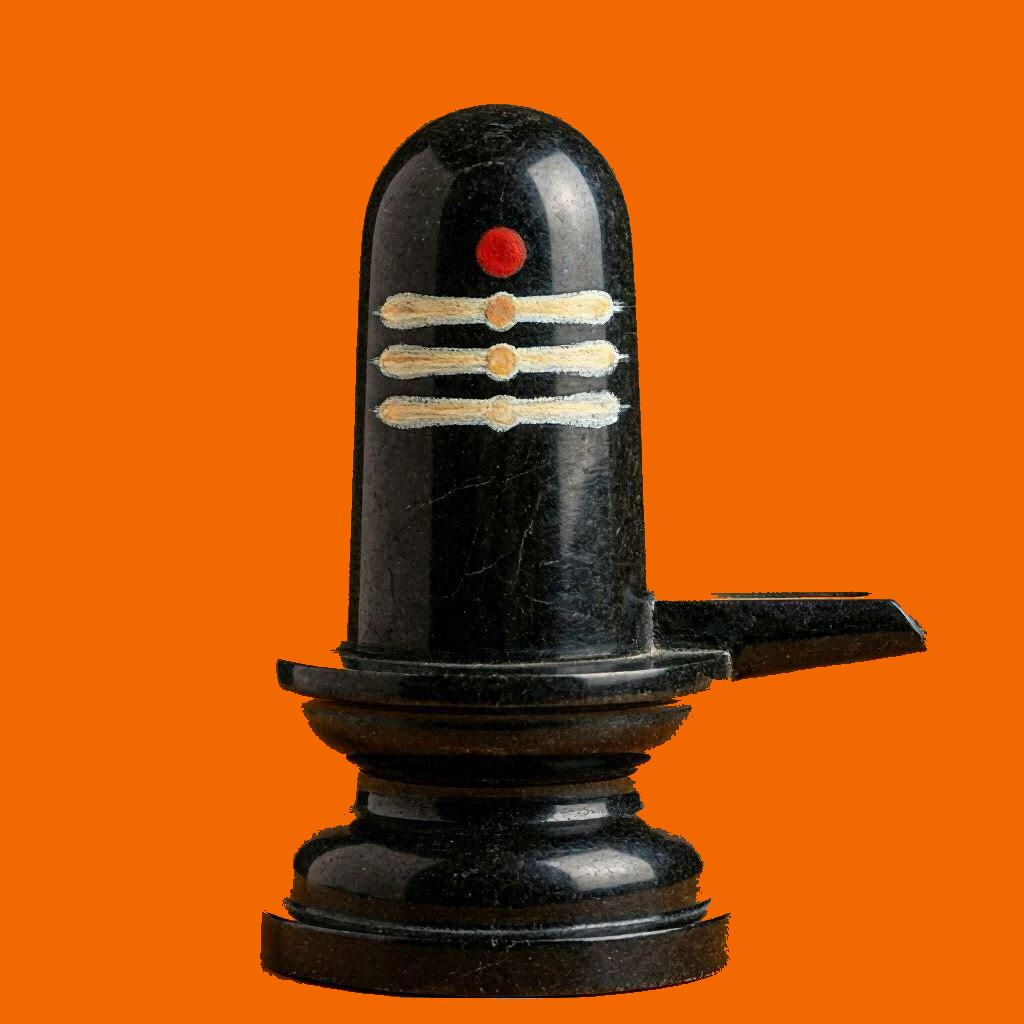
The opening verse
रत्नैः कल्पितमासनं हिमजलैः स्नानं च दिव्याम्बरं नानारत्नविभूषितं मृगमदामोदाङ्कितं चन्दनम्। जातीचम्पकबिल्वपत्ररचितं पुष्पं च धूपं तथा दीपं देव दयानिधे पशुपते हृत्कल्पितं गृह्यताम्॥
In IAST:
Ratnaiḥ kalpitam-āsanaṃ hima-jalaiḥ snānaṃ ca divyāmbaraṃ nānā-ratna-vibhūṣitaṃ mṛgamadāmodāṅkitaṃ candanam, jātī-campaka-bilva-patra-racitaṃ puṣpaṃ ca dhūpaṃ tathā dīpaṃ deva dayānidhe paśupate hṛt-kalpitaṃ gṛhyatām.
In English:
A throne fashioned of gems, a bath of Himalayan ice-water, divine garments adorned with many jewels, sandal paste mixed with the fragrance of musk, flowers of jasmine and campaka and bilva, incense and lamp — O Lord, ocean of compassion, lord of all beings, accept these offerings imagined in my heart.
The practice the hymn enacts
This is not a hymn about worship. This is a hymn that is worship. The chanter does not describe puja from outside — the chanter performs puja from inside, using each verse as the script for one segment of the ritual.
Read the opening verse again, slowly. The instruction is not “imagine that you have offered gems”; the instruction is “the throne is gems, the bath is Himalayan water, the cloth is divine fabric.” Each item is named and offered in the same breath. There is no separation between the picturing and the offering. The mind that pictures the throne is already placing the deity upon it.
If done well, by the end of the six verses, the chanter has performed a complete sixteen-step puja — internally — and the felt sense in the body is indistinguishable from having done it physically.
What gets offered, verse by verse
| Verse | Upacharas (worship-items) offered |
|---|---|
| 1 | Throne (gems), bath (Himalayan ice-water), garments, sandal paste, flowers (jasmine, campaka, bilva), incense, lamp |
| 2 | Food offerings — fruits, sweets, milk, ghee, betel leaf with camphor and pan |
| 3 | Umbrella of state, fan (chamara), mirror, dance, song, prostration |
| 4 | Procession (yatra), seat for the visiting deity, ornaments, mantras |
| 5 | The apology (kshama-prarthana) — “whatever was forgotten, whatever was done amiss” |
| 6 | The atma-samarpana — the dissolution: “You are the Self; my body is your temple; my action is your worship” |
The progression moves from sensual offering (gems, water, sandal) to intellectual offering (mantras, song) to total dedication (the body and the doer as already the offering). The hymn is a graded ladder.
Why this is the householder’s secret weapon
Adi Shankara was clear-eyed about the situation of the lay practitioner. Not everyone can travel to a temple every day. Not everyone has a household shrine elaborate enough for full sixteen-step puja. Not everyone is at home in the evening. Not everyone is well.
The Shiva Manas Puja meets all these situations. A practitioner can perform the full hymn:
- On a train, with eyes closed
- In a hospital bed
- In a hotel room far from home
- Before sleep, in five minutes
- In a temple, alongside the physical puja being performed by the priest — as a deepening layer
The hymn requires nothing: no bilva, no water, no flowers, no lamp. It asks only for the mind that is reading these words. That is its genius.
The closing verse — the dissolution
The sixth verse is the structural payoff:
आत्मा त्वं गिरिजा मतिः सहचराः प्राणाः शरीरं गृहं पूजा ते विषयोपभोगरचना निद्रा समाधिस्थितिः। सञ्चारः पदयोः प्रदक्षिणविधिः स्तोत्राणि सर्वा गिरो यद्यत्कर्म करोमि तत्तदखिलं शम्भो तवाराधनम्॥
In English:
You are the Self; Parvati is the intellect; my breaths are your attendants; my body is your house; my enjoyment of the world is your worship; my sleep is samadhi; my steps are the circumambulation; all my words are your hymns. Whatever action I perform — all of it, Shambhu, is worship of you.
This is the move that makes the hymn one of the philosophical high-points of the Shaiva devotional corpus. After five verses of carefully imagined ritual, the sixth verse dissolves the distinction between ritual and life. There is no longer a special time called puja. Every breath is the attendant. Every step is the circumambulation. Every word is the hymn. Every action is the worship.
This is Advaita Vedanta in devotional form. The hymn does not abandon ritual — it includes ritual and then sees through to what ritual was pointing at all along. The practitioner who fully internalises the sixth verse cannot, even in principle, leave the temple, because the temple is always wherever the practitioner is.
When to use the hymn
The traditional uses:
- Bedside before sleep — five to seven minutes, eyes closed
- On travel — when physical puja is impossible
- During illness — the only puja a sick body can perform
- As deepening practice alongside physical puja
- As teaching tool for explaining what puja actually is — to a child, to a sceptic, to a new convert
The hymn is a private practice. There is no group recitation tradition around it; it is performed alone.
On reciting it well
The metre is Shardulavikridita — nineteen syllables per line, the slowest and most stately of the long Sanskrit metres. The hymn cannot be hurried. Each line wants two full breaths to recite at the right pace.
For a beginner: do not try to memorise this hymn before you have practiced it as a guided meditation. The first five or ten times, read it slowly from the text — eyes on the page, mind on the images — and let each verse prompt the next mental action. After ten or twenty repetitions, the sequence is internal and the text can be set aside.
A typical first session takes about ten minutes. An experienced practitioner can perform the full hymn in five or in twenty, depending on how richly the images are allowed to develop.
Practice
The Shiva Manas Puja is, in the editorial view of this library, one of the most underused hymns in the contemporary Shaiva devotional canon. Most practitioners stop at the Rudrashtakam or the Lingashtakam — both excellent hymns — and never reach for the manas puja. This is a loss. The hymn does something the others cannot: it teaches the practitioner that the entire apparatus of worship is, ultimately, an inward act, and trains them to perform it in the inward space directly.
Recommended starter sequence:
- Pour a deepa (lamp). Sit. Close eyes.
- Recite verse one slowly, allowing each upachara to take shape in the mind’s eye.
- Repeat for verses two through five.
- Open eyes for the closing verse. Read it aloud.
- Sit in silence for one minute.
After thirty days of this, the practice settles. After ninety, it becomes indispensable.