The library
The mantras, fully rendered.
ॐ नमः शिवाय
Devanagari, IAST transliteration, accessible English meaning, scripture source, when to recite, and curated audio for every mantra. The library is being built in the open — each page is hand-sourced, multi-cited, and reviewed.
Now live
20 mantras in the library
Click any to read the full meaning, source, and practice notes.
- चाम्पेयगौरार्धशरीरकायै
Ardhanarishvara Stotram
Nine verses to Shiva-Parvati as one body — half saffron-fair, half ash-smeared. The hymn refuses to separate Shiva and Shakti; it bows to both as inseparable in one form. Attributed to Adi Shankaracharya.
- त्रिदलं त्रिगुणाकारं
Bilvashtakam
Eight verses to the bilva (bel) leaf — Shiva's dearest offering. The hymn reads the leaf's three foliate form as the three gunas, the three eyes of Shiva, the three branches of Veda — bowing in the act of offering.
- विश्वं दर्पणदृश्यमाननगरी
Dakshinamurti Stotram
Adi Shankara's ten verses to Shiva-as-Dakshinamurti — the silent guru facing south, teaching Advaita to four old sages by sitting in mauna under the banyan tree. The hymn for the seeker who finally hears the silence.
- विश्वेश्वराय नरकार्णवतारणाय
Daridraya Dahana Shiva Stotram
Eight verses to Shiva as the burner of poverty. Attributed to Vasishtha. The hymn householders turn to in financial difficulty — without shame, in the long Shaiva tradition of frank petition for material wellbeing.
- सौराष्ट्रे सोमनाथं च
Dwadasa Jyotirlinga Stotram
Adi Shankara's hymn naming the twelve Jyotirlingas — the self-manifested Shiva lingas across India. A verbal yatra: by reciting the hymn, one circumambulates all twelve sites in two minutes.
- देवराजसेव्यमानपावनाङ्घ्रिपङ्कजं
Kalabhairava Ashtakam
Adi Shankara's eight verses to Kalabhairava — the fierce form of Shiva, kshetrapala (guardian deity) of Varanasi. Each verse closes with the refrain 'I worship Kalabhairava, lord of the city of Kashi.'
- ब्रह्ममुरारिसुरार्चितलिङ्गम्
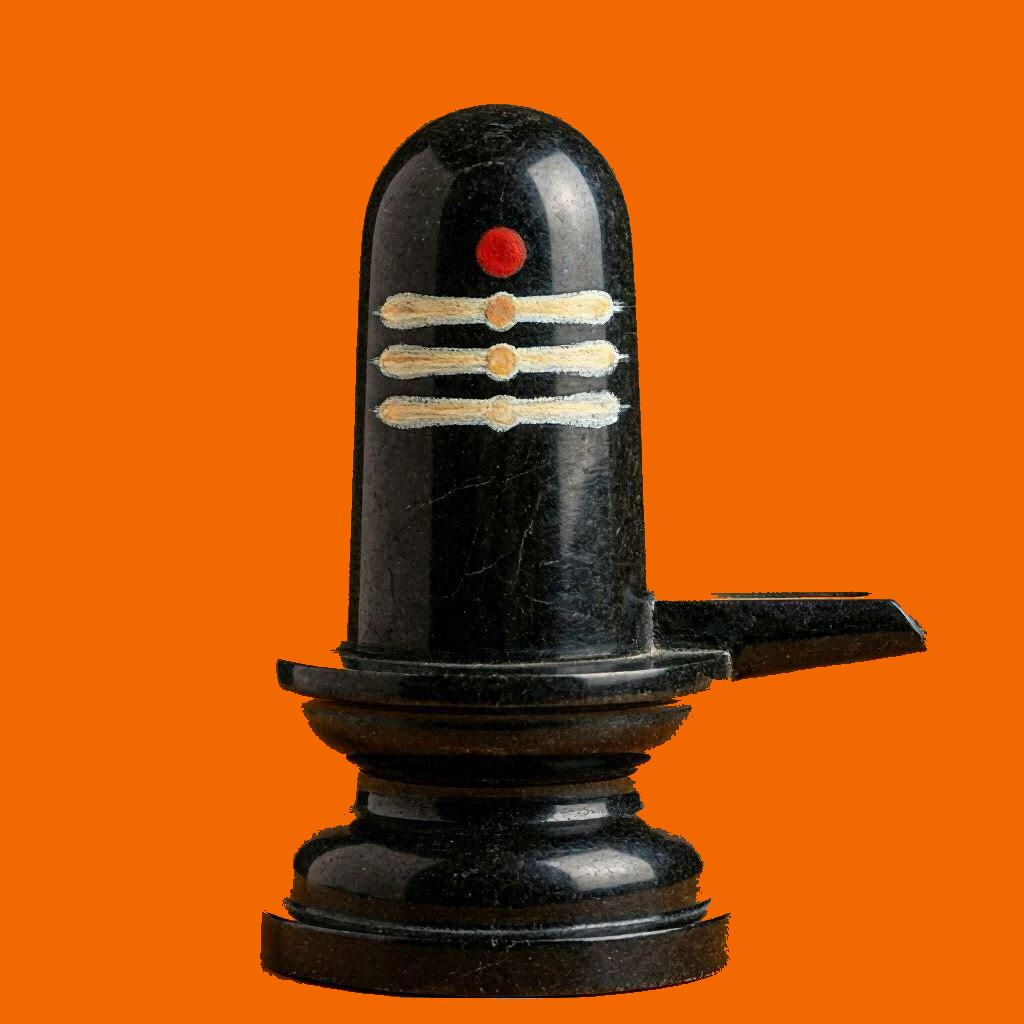
Shiva Lingashtakam
Eight verses to the Shiva Linga — the formless form. Each verse ends with the refrain 'tat-praṇamāmi sadāśiva-liṅgam' — 'to that I bow, the eternal Shiva Linga.' The canonical hymn of Pradosham worship.
- ॐ त्र्यम्बकं यजामहे
Mahamrityunjaya Mantra
The death-conquering mantra. Rig Veda 7.59.12 — a hymn to the three-eyed one, recited for protection, healing, fearlessness, and the dissolution of bondage that ripeness brings.
- ॐ हौं जूं सः
Mahamrityunjaya Beeja Mantra
The Tantric seed-form of the Mahamrityunjaya. Four bija syllables (Oṃ Hauṃ Jūṃ Saḥ) prefix the Vedic verse. An initiation-required practice — more potent and more demanding than the Vedic form alone.
- मनोबुद्ध्यहंकार चित्तानि नाहं
Nirvana Shatkam
Adi Shankara's six verses of Advaita non-identity. Each names what the self is not — not mind, not body, not the sheaths — and closes 'Shivoham, Shivoham': 'I am Shiva, of the form of consciousness-bliss.'
- ॐ नमः शिवाय
Om Namah Shivaya
The Panchakshara — five sacred syllables. The central mantra of Shaiva devotion, drawn from the Krishna Yajurveda's Sri Rudram, and the first mantra given at most Shaiva initiations.
- नागेन्द्रहाराय त्रिलोचनाय
Shiva Panchakshara Stotram
Adi Shankara's five-verse hymn — each verse takes one syllable of the Panchakshara (Na, Mah, Shi, Vā, Ya) and unfolds the iconography behind it. The formal commentary on the mantra, in five tight verses.
- नमामीशमीशान निर्वाणरूपम्
Rudrashtakam
Tulsidas's eight verses to Rudra — the form of Shiva who dissolves. Composed in classical Sanskrit and embedded in the Ramcharitmanas; one of the most widely sung devotional Shiva hymns in North India.
- श्री शिव चालीसा
Shiv Chalisa
Forty verses in Awadhi-flavoured Hindi praising Shiva. The most-recited Shiva hymn in North Indian householder practice. Composed in the same Chalisa form that Tulsidas's Hanuman Chalisa made canonical.
- आदौ कर्मप्रसङ्गात्
Shiva Aparadha Kshamapana Stotram
Adi Shankara's hymn of apology — sixteen verses confessing every category of offense the chanter has committed against Shiva. The closing recitation that absorbs the imperfections of any worship.
- रत्नैः कल्पितमासनं हिमजलैः
Shiva Manas Puja
Adi Shankara's six-verse hymn of mental worship. Each verse offers Shiva a different upachara — throne, bath, flowers, incense — imagined in detail. The practice for when no physical puja is possible.
- ॐ स्थिराय नमः
Shiva Sahasranama (An Introduction)
One thousand names of Shiva. The Mahabharata's Anushasana Parva and the Linga Purana preserve the two principal versions. An introduction with selected names — the full hour-long recitation is a lifetime practice.
- जटाटवीगलज्जलप्रवाहपावितस्थले
Shiva Tandava Stotram
The cosmic-dance hymn attributed to Ravana. Sixteen verses of panchachamara metre — eight feet per line — whose rhythm is the rhythm of Shiva's tandava: creation, preservation, dissolution.
- नमस्ते रुद्र मन्यवे
Sri Rudram (Namakam + Chamakam)
The oldest extant Shaiva hymn, from the Krishna Yajurveda. Two parts: Namakam (11 anuvakas of namaskara) and Chamakam (11 of petition). The source-text from which Om Namah Shivaya itself was drawn.
- पशूनां पतिं पापनाशं परेशं
Vedasara Shiva Stotram
Adi Shankara's nine-verse hymn — 'Essence of the Vedas.' Each verse opens 'Pashunam patim' and bows to Shiva as Pashupati, lord of all bound beings. The Vedic-Shaiva worldview compressed into four minutes.
The method
Multi-sourced, hand-reviewed, fully cited.
Every mantra page is built from at least three authoritative sources: the original Sanskrit text, an established translator (Aurobindo, Yogananda, Vivekananda, Pandurang Sane Guruji, etc.), and a modern editorial reading. We do not invent meaning. We do not paraphrase across traditions. Where commentaries disagree, we say so.
Schema-tagged with CreativeWork and FAQPage markup so that AI search
engines (Perplexity, ChatGPT, Google AI Overviews) can cite the page
correctly when someone asks "what does Om Namah Shivaya mean".
Audio uses public-domain or properly licensed recordings of established Sanskrit reciters. Where audio is not yet available, the page launches without it rather than mock it.