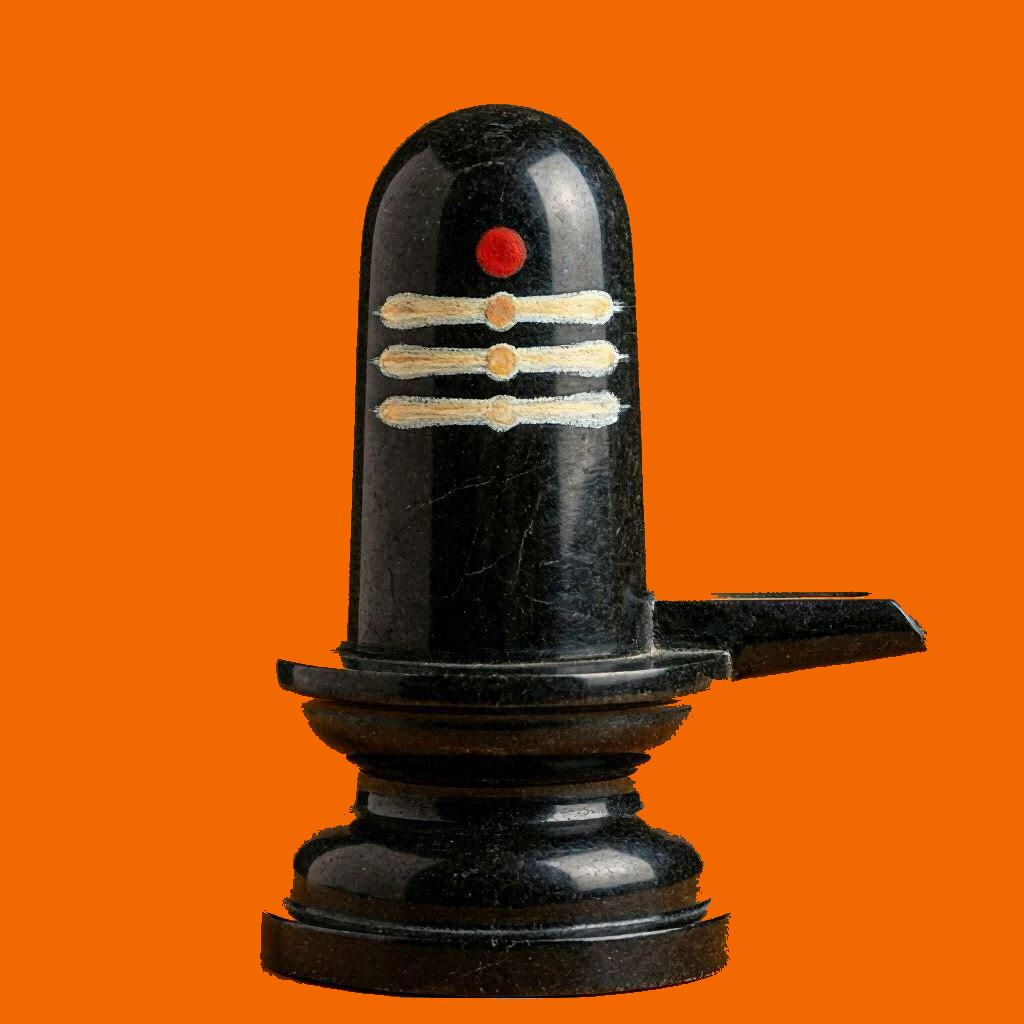
Maha Shivaratri is the single most important night of the Shaiva year. It falls on the fourteenth night of the dark fortnight of the lunar month of Phalguna — usually February or March in the Gregorian calendar. Every other Shaiva observance, however meaningful, is a smaller key in the same scale; Maha Shivaratri is the tonic note.
If you have ever wondered why the temple queues in Ujjain stretch for miles before dawn on a specific February night, why some otherwise-ordinary practitioners go without sleep for forty-eight hours, why the rivers at Kashi and Nashik fill with thousands of pilgrims before sunrise — Maha Shivaratri is the answer. This essay explains what the night actually is, what the canonical vigil involves, and how to keep it whether you can reach a Jyotirlinga or are sitting in a flat in Mumbai or Toronto with no temple nearby.
What the night is
The Sanskrit name Mahā Śivarātri literally means “the Great Night of Shiva.” Two readings, both held in tradition:
The cosmological reading: this is the night Shiva is said to have performed the tandava — the cosmic dance that dissolves a creation-cycle and prepares the ground for the next. The night marks the threshold between cycles. The dance is the act by which the universe is unmade so that it can be re-made.
The biographical reading: this is the night Shiva is said to have married Parvati. The all-night vigil is the bridal-procession watch — the devotees holding the lamp through the dark while the divine couple comes together. In this reading, the night is not about dissolution but about the union that the dissolution makes possible.
Both readings sit comfortably together. The dissolution and the union are the same event seen from different angles. The cosmic dance breaks down what was; the marriage makes possible what comes next. Both happen on Maha Shivaratri.
A third, more philosophical reading appears in the Shaiva-Tantric and Kashmir Shaiva traditions: Maha Shivaratri is the night the meditator’s individual consciousness (the jiva) dissolves into the universal consciousness (Paramashiva). On this night, the practice that produces this recognition is more energetically supported than on any other night of the year. The all-night vigil is the structural opportunity to do the practice that the night supports.
These three readings — cosmological, biographical, philosophical — converge on the same instruction: stay awake, chant, fast, and offer through the night.
The four watches (char prahar)
The Maha Shivaratri night is traditionally divided into four watches of approximately three hours each. The night begins at sunset and ends at sunrise. Each watch has its own canonical practice.
| Watch | Hours (typical) | Element | Offering | Mantra emphasis |
|---|---|---|---|---|
| First (Pratham Prahar) | sunset → ~21:00 | Water | abhishekam with milk | Om Namah Shivaya |
| Second (Dvitiya Prahar) | ~21:00 → midnight | Fire | abhishekam with curd | Mahamrityunjaya |
| Third (Tritiya Prahar) | midnight → ~03:00 | Air | abhishekam with ghee | Rudrashtakam |
| Fourth (Chaturth Prahar) | ~03:00 → sunrise | Earth | abhishekam with honey | Shiva Tandava Stotram |
The four-watch structure is the canonical Shaiva-Tantric framework. The element associations vary across regional traditions; the four substances for abhishekam (milk, curd, ghee, honey) are the most consistent across sources.
Each watch ideally begins with a full abhishekam — the ritual bathing of the linga with the watch’s substance, followed by clean water, followed by bilva-leaf garlanding. Then the watch’s mantra is recited until the next watch begins, typically combined with quiet meditation.
You do not need to do all four watches at the same intensity. Many serious practitioners do the first and the fourth most fully, holding the middle two as sustained japa with shorter rituals at the changeovers. The goal is to remain awake and turned toward Shiva continuously through the night — the exact ritual structure can flex to your stamina.
Why the vigil matters
The instruction to stay awake is not optional. It is structurally what makes Maha Shivaratri different from any other Shaiva observance.
Three reasons, all worth understanding:
Symbolic: sleep is the daily image of the unconsciousness from which spiritual practice is meant to wake us. To stay awake through the longest night of the lunar month is a small enacted commitment that you will also stay awake to the larger Self that the practice aims at. The body-act and the spirit-act mirror each other.
Tantric-energetic: the traditional Shaiva view is that the night of Maha Shivaratri produces a particular subtle-energetic atmosphere that the meditator can ride if awake. Falling asleep means missing the opportunity — the energy is most available between midnight and 03:00, the third prahar, and a sleeping practitioner cannot meet it. Whether you accept this framing literally or read it as a useful psychological metaphor, the practical instruction is the same: stay up.
Communal: across the subcontinent, hundreds of millions of Shaivas keep this vigil together. The shared act on a shared night strengthens the practice of every individual practitioner. You are not alone at 2am holding the lamp; an entire civilizational tradition is awake with you.
How to keep it at home
For practitioners who can reach a Jyotirlinga (or any major Shiva temple), the canonical instruction is to attend the temple’s char prahar puja — most major temples perform abhishekam at each of the four watch boundaries with mantras chanted continuously between. For the rest of us, the home vigil is the path. Here is a complete protocol.
Three days before
- Begin reducing food intake. Skip non-vegetarian, alcohol, garlic, and onion if you eat them. Move toward simpler vegetarian meals.
- Sleep one or two hours less than usual. This trains the body to be awake at unusual hours on the vigil night.
- Begin daily recitation of the Mahamrityunjaya Mantra if you don’t already.
The day of
- Wake before sunrise. The vigil traditionally begins at sunset, but the day’s discipline begins much earlier.
- Take a complete bath (head + body) with the intention. Many practitioners take a second bath after sunset and before the first watch.
- Fast from sunrise. The traditional Shivaratri fast (upavas) is from sunrise on the day to sunrise on the day after. Water is permitted. Some traditions allow fruit and dairy after sunset; the stricter practice is water only. Choose what your body can sustain — a half-broken fast is not a failure, a competent practitioner pacing themselves is not less devoted.
- Light the home shrine. Pour a fresh diya. Place a small image or linga in front of you. Garland with bilva leaves if you have them — bilva is Shiva’s leaf and is the canonical offering on this night.
- Sit briefly at noon with Om Namah Shivaya — even five minutes — as the formal opening intention.
The first watch — sunset to ~21:00
- At sunset, perform a full abhishekam on your home linga (or, if you have no linga, on a clean stone you have placed with intention). Pour clean water first, then milk, then water again, then bilva leaves. If you only have water, water is enough.
- Recite Om Namah Shivaya continuously through the watch — softly aloud or in a whisper. The five-syllable mantra is the foundational offering.
- If you have the Lingashtakam memorised, recite it once or twice as a bridge to the second watch.
The second watch — ~21:00 to midnight
- A second abhishekam — water, then curd, then water again, then bilva.
- The Mahamrityunjaya Mantra is the focus of this watch. Recite it 108 times if possible (most practitioners use a mala). The Mahamrityunjaya is the death-conquering mantra; the second prahar is the watch in which this dimension of Shiva is most active.
- Sit quietly between the recitations. Do not try to fill every minute with sound. The silence between is also the practice.
The third watch — midnight to ~03:00
- This is the most charged watch. Many traditions hold that the actual moment of Shiva’s tandava — and the moment of his marriage to Parvati — happen at midnight on this night.
- A third abhishekam — water, then ghee, then water, then bilva.
- The Rudrashtakam is the canonical hymn for this watch. Eight verses; recite slowly. If you do not know it from memory, read it with full attention. The Rudrashtakam closes with one of the most disarming surrender-lines in Shaiva devotional literature: “I do not know yoga, I do not know japa, I do not know puja — I have only come to you, Lord.”
- After the Rudrashtakam, sit in silent meditation until the fourth watch begins. This is the deepest hour. Whatever practice you do here — silent attention, chanted mantra, contemplation of the linga — is more energetically supported than at any other moment of the year.
The fourth watch — ~03:00 to sunrise
- A fourth and final abhishekam — water, then honey, then water, then bilva. The honey closes the abhishekam sequence; in some traditions a final pouring of sandalwood-water completes it.
- The Shiva Tandava Stotram is the canonical fourth-watch hymn. Recite it with full breath; let the rhythm carry. The Tandava hymn names the cosmic dance — and the night’s dance, by the fourth watch, has done much of its work.
- Greet the dawn with the Mahamrityunjaya one more time. As the sun rises, the vigil closes.
Closing
- At sunrise, perform a final brief abhishekam — water alone is sufficient. Place a final bilva leaf on the linga.
- Break the fast with something simple — fruit, water, milk. Do not break a fast with heavy food; the body has been fasting for nearly 24 hours and needs gentle reintroduction.
- Sit for a brief closing meditation. Acknowledge the night that has just been kept.
- Sleep when needed. The vigil is closed.
What to expect
A few honest observations from practitioners who have kept many vigils:
The third watch is the test. Between midnight and 03:00 the body wants sleep more than at any other hour. Practitioners often describe a wall — a moment around 02:00 when staying awake feels impossible. Crossing that wall is the practice. Most who do report that the fourth watch, after crossing, has an unmistakable lightness.
The experience varies by year. Some Maha Shivaratri vigils produce profound shifts; others feel like a beautiful but ordinary night of devotion. Both are correct. The practice does not promise specific experiences; the practice promises continuity of devotion over years. Some years are quiet years; some are not.
The body remembers. Practitioners who have kept multiple Maha Shivaratri vigils often report that the body knows what to do by the third or fourth year — the rituals fall into place without effort, the fast holds without complaint, the wakefulness sustains itself. The vigil is a practice that compounds.
A missed vigil is not a failure. Life happens — illness, work, family obligations, geographic constraint. If you cannot keep the vigil one year, the next year is still there. The Shaiva tradition is forgiving on this point: an absent year does not erase the years that were kept.
When the next one is
Maha Shivaratri 2027 falls on Wednesday, March 17, 2027 (sunset begins the vigil, sunrise on March 18 closes it).
Earlier or later years can be looked up against the Hindu calendar — Maha Shivaratri is always the fourteenth lunar day (chaturdashi) of the dark fortnight (krishna paksha) of the month of Phalguna. Phalguna typically falls in February or March of the Gregorian calendar.
What the day prepares you for
The deeper Shaiva understanding is that Maha Shivaratri is not just an event but a rehearsal. The cosmic dissolution it commemorates is not a one-time historical event; it is the dissolution that happens to every practitioner at the end of every life. The vigil is, in part, preparation for that final crossing — a practical training in remaining attentive and Shiva-turned when the body’s normal supports (sleep, food, comfort) are not available.
Practitioners who keep Maha Shivaratri seriously across many years often describe a quiet effect: the fear of the final dissolution diminishes. Not by reasoning, not by belief — by repeated rehearsal. The night that was strange the first time becomes familiar by the tenth; the eventual final night becomes, in some real way, just another Maha Shivaratri.
That is the gift the practice gives. It does not ask to be believed in. It asks only to be kept.
Om Namah Shivaya.