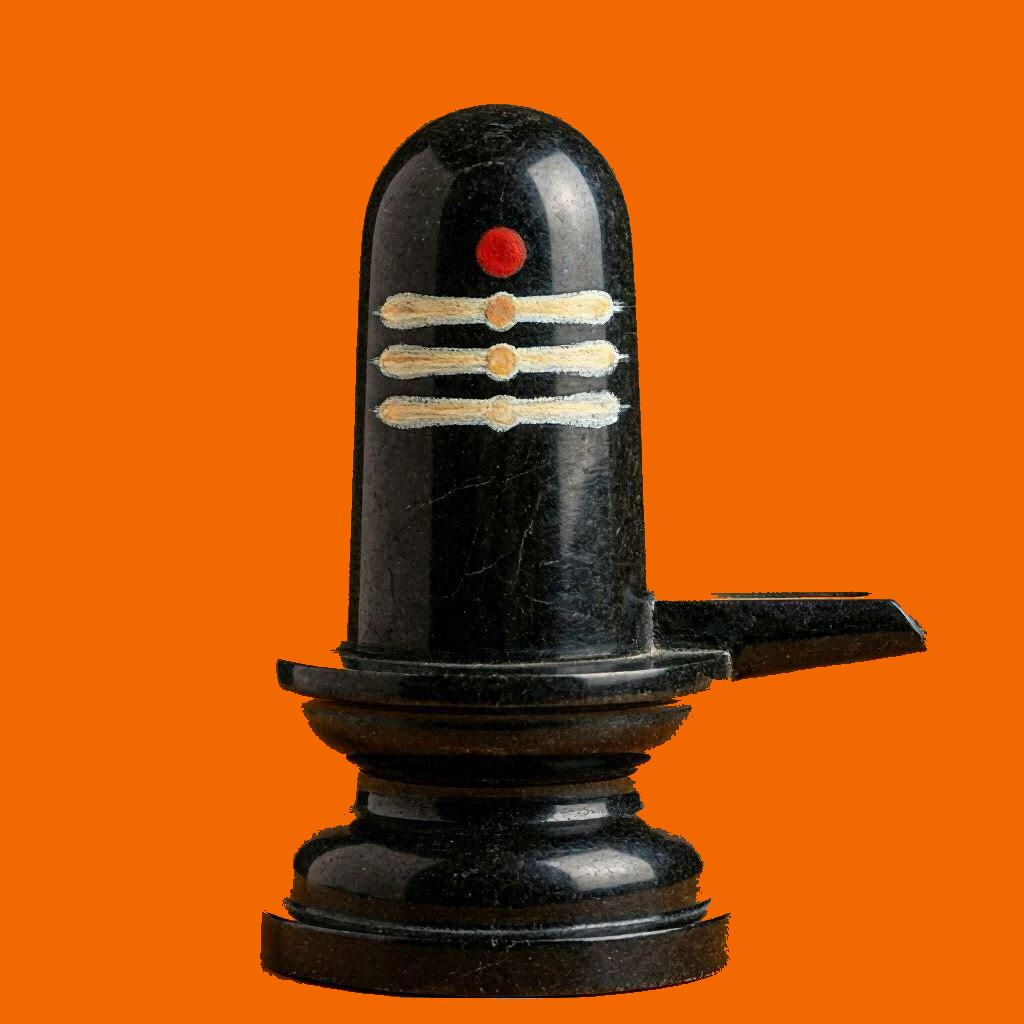
The five syllables
The Panchakshara mantra is the doorway to Shaiva devotion. Five syllables — Na · Mah · Shi · Vā · Ya — preceded by the seed-sound Om. It is the mantra most Shaiva initiates receive first, the mantra most often inscribed on temple walls, the mantra chanted at every level of practice from the village householder to the wandering ascetic.
The five syllables, in the Shaiva interpretive tradition, correspond to the five great elements (pancha mahabhuta) that compose the manifest world:
- Na — earth (prithvi)
- Mah — water (apas)
- Shi — fire (agni)
- Vā — air (vāyu)
- Ya — ether (ākāśa)
To chant the mantra in full is to invoke Shiva as the indwelling principle of all five elements — to recognise that the body chanting and the cosmos within which it chants are made of the same substance, and that substance is Śiva, “the auspicious one.”
Source and scriptural standing
The five-syllable kernel appears in the Sri Rudram, one of the most ancient hymns in the Vedic corpus. The Sri Rudram is embedded in the Krishna Yajurveda (Taittiriya Samhita 4.5 — the Namakam — and 4.7 — the Chamakam), and Vedic priests have recited it for over three thousand years as part of formal Shaiva worship. The phrase namaḥ śivāya appears in the eighth anuvāka of the Namakam, embedded among other namaskaras to Rudra-Shiva’s many forms.
The framing Om that precedes the five syllables is a later addition, contributed by the Tantric and Agamic strata of Shaiva tradition (roughly the 6th–10th centuries CE). The combined six-syllable form Oṃ Namaḥ Śivāya is what most contemporary practitioners chant.
Meaning
The literal sense is straightforward:
- Oṃ — the primordial sound from which the cosmos sounds itself into being
- Namaḥ — “salutation,” “I bow” — an act of reverent surrender
- Śivāya — “to Shiva,” the dative form (literally, “for the sake of Shiva”)
“Om — I bow to Shiva.” Six syllables, complete.
The interpretive depth comes from the word Śiva itself. In its earliest Vedic use the word means “auspicious,” “kindly,” “benign” — an epithet applied to the otherwise fearsome Rudra to soften and propitiate him. In later Shaiva-Siddhanta and Kashmir Shaiva metaphysics, Śiva becomes the proper name of the absolute principle — the changeless witness, the consciousness in which all phenomena arise and dissolve. To bow to Shiva, in this reading, is to bow to the consciousness one already is.
This double register — Shiva as personal deity and as the impersonal ground of being — is the heart of the mantra’s power. It accommodates the devotee who weeps before a lingam and the renunciate who has dissolved into formless witnessing. Both are chanting the same five syllables.
When to recite
Daily practice is the foundation. Most Shaiva householders recite at least one mala (108 chants) at dawn, often a second at dusk. The mantra is particularly emphasised on:
- Somvar (Monday) — Shiva’s weekday
- Pradosham — the twilight window on the trayodashi tithi, twice each lunar month, when Shiva is said to dance the cosmic dance and accept devotion most readily
- Shravan month — the full month of monsoon devotion to Shiva, roughly July–August
- Maha Shivaratri — the great night of Shiva, once a year, when practitioners chant through the four watches of the night
Practice notes
There is no wrong way to chant a mantra one has been given by tradition. There are, however, practices that tradition has tested and refined over centuries:
- Sit still. The body’s stillness lets the mind settle on the sound.
- Use a mala. 108 beads. The hand counts so the mind needn’t.
- Hear the syllables. The mantra is a sound, not a thought. Aim to hear it inside as you chant it outside.
- Begin and end with silence. A few breaths of stillness before and after lets the sound settle into the body and the body into the sound.
The five syllables will do the work. The practitioner’s only task is to show up.
Related practice
The Panchakshara opens the door. Many practitioners then deepen with:
- Mahamrityunjaya Mantra — for protection and healing
- Rudrashtakam — Tulsidas’s eight verses, sung for grace
- Lingashtakam — the eight verses to the formless form, on Pradosham