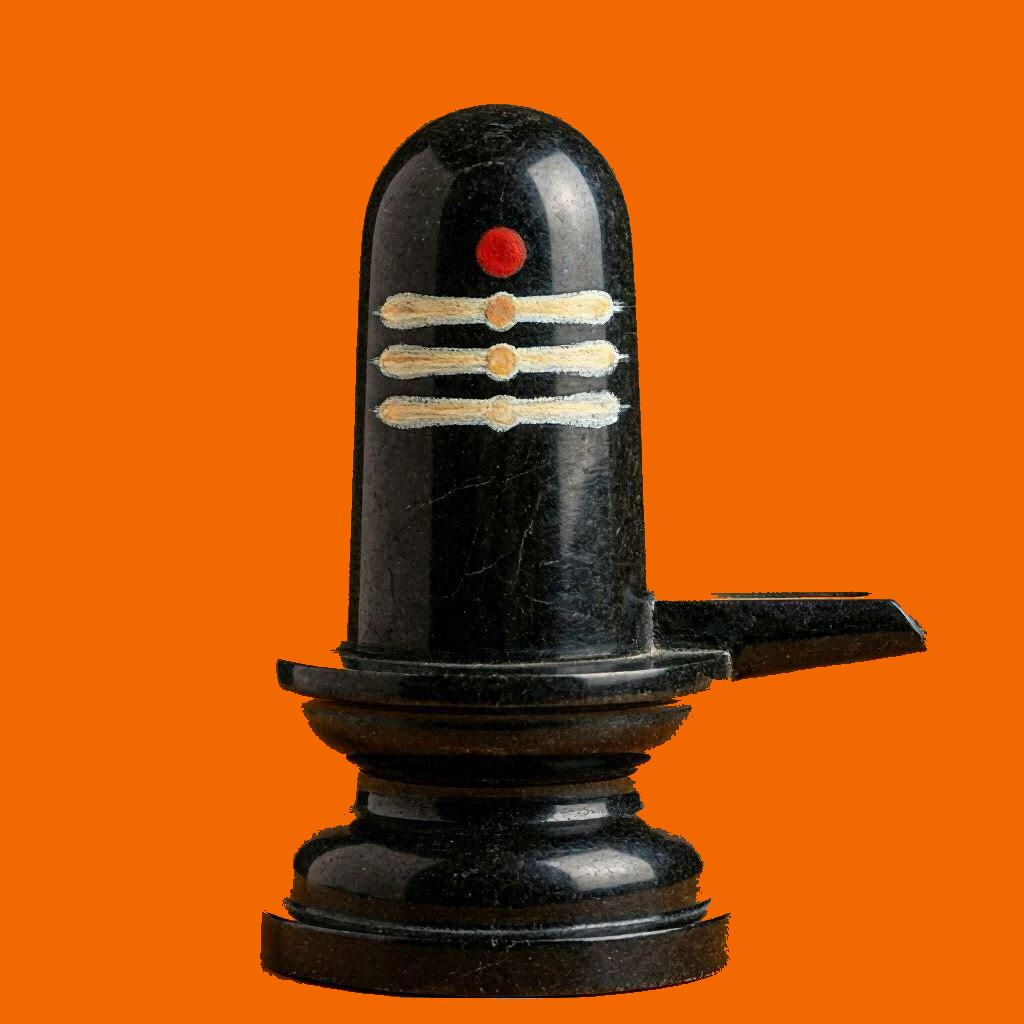
If Maha Shivaratri is the great annual peak of the Shaiva calendar, Pradosham is the year’s quiet heartbeat. It falls twice every lunar month — on the thirteenth lunar day (trayodashi) of both the bright and dark fortnights — which gives a serious Shaiva practitioner roughly 24 Pradoshams a year to keep.
This is the observance that, in the long view, often produces more transformation than the headline annual rituals. Maha Shivaratri is the showpiece; Pradosham is the practice. The first is the punctuation mark; the second is the sentence.
This essay is for the practitioner who has the daily mantra steady and is ready to add the next layer.
What Pradosham is
The Sanskrit word pradoṣa means “twilight” — specifically the sandhya hour bridging day and night. The Pradosham observance is held during this twilight hour on every trayodashi (thirteenth lunar day), which falls twice a lunar month.
The traditional time-window is 90 minutes:
- Start: approximately 1.5 hours before sunset
- End: approximately 1.5 hours after sunset
The exact start and end depend on local sunset and the precise lunar calendar; most Hindu calendar apps mark the Pradosham time per location.
In Shaiva theology, this is the hour Shiva is said to dance the Tandava — not the cosmic-dissolution tandava of Maha Shivaratri, but a daily smaller tandava in which Nandi (his vahana, the bull) sings. The story: at Pradosham, all the deities gather at Mount Kailash to witness Shiva’s dance. Worship offered during Pradosham is held to reach Shiva most directly because he is most present at this hour.
Whether one accepts this mythological framing literally or treats it as a useful liturgical container, the empirical observation across Shaiva practitioners is consistent: Pradosham practice has an unusual quality of “landing” that less time-specific practice does not.
Why twice-monthly is the right cadence
Daily practice (the morning Om Namah Shivaya) anchors the bhakti at the level of habit — small, sustained, foundational.
Annual practice (Maha Shivaratri) anchors the bhakti at the level of identity — large, deliberate, transformative.
Pradosham anchors the bhakti at a third register that neither daily nor annual practice reaches: the recurring deeper-than-daily session that returns just often enough to keep the practitioner from drifting back into the casual.
Two weeks is approximately how long it takes for the daily practice to start feeling rote in many practitioners. Pradosham arrives every two weeks like an interrupt — pulling the practice back into the foreground, raising the bar for one evening, sending you back to the daily mantra with renewed attention. Over a year, that recurring re-attention is what keeps the practice from staling.
This is why advanced Shaivas often say that Pradosham, not Maha Shivaratri, is the observance that has most shaped their decade-on-decade practice. Maha Shivaratri only happens once a year; Pradosham happens twenty-four times.
When Pradoshams fall
The lunar calendar is offset from the solar calendar, so Pradoshams shift by 11 days each year. They cannot be memorised as Gregorian dates. The two reliable ways to track them:
- A Hindu calendar app (Drik Panchang, Hindu Calendar, etc.) — search for “Pradosham” and it lists the next several.
- The pattern: count 13 lunar days from each new moon and 13 from each full moon. The afternoon of those days is Pradosham.
For Shiv Darshan users, the in-app Sacred Calendar marks every Pradosham automatically and sends a gentle morning reminder on the day.
There are two specially-named Pradoshams that get extra observance in some traditions:
- Soma Pradosham — Pradosham falling on a Monday. Doubly potent (Monday is also Shiva’s day of the week).
- Shani Pradosham — Pradosham falling on a Saturday. Held to remove specific karmic obstructions.
Both are observed in the standard Pradosham form; the “special” framing is a regional folk tradition rather than canonical scripture. A practitioner who keeps every Pradosham equally is in no way doing less.
The traditional protocol
Pradosham is one of the more flexible Shaiva observances — it can be kept in 20 minutes at home, in 60 minutes at a temple, or in a multi-hour vigil at a major Jyotirlinga. Three tiers, all canonically valid:
Tier 1: Home, 20-30 minutes
This is the practical baseline most working practitioners keep.
- Bathe (full bath if possible; head-and-hands wash if not) immediately before the practice.
- Light a fresh diya at your home shrine. A single oil lamp or candle is sufficient. The flame is the formal sign that the Pradosham session has begun.
- Recite the Rudrashtakam — eight verses, takes about 4 minutes, and is the canonical hymn most Shaivas associate with the Pradosham hour. If you don’t know it from memory yet, read it slowly with the printed text in front of you.
- 108 rounds of Om Namah Shivaya with a mala. Approximately 10-12 minutes at steady pace.
- Sit in silence for two to three minutes after the mala. This silent close is structurally important — it is the field the mantra has prepared.
- Extinguish the diya with a small final bow.
That’s it. Twenty minutes. Reliable across years.
Tier 2: Temple, 60-90 minutes
If a Shiva temple is accessible during the Pradosham window, the canonical observance is to attend the sandhya aarti — the twilight aarti — which most major Shiva temples perform precisely at this hour.
The flow at a typical temple:
- Arrive at least 30 minutes before sunset so you can sit briefly before the linga before the aarti begins.
- Offer bilva leaves if you have brought any. Bilva is the canonical Pradosham offering.
- Stay for the full sandhya aarti — usually 15-25 minutes including the abhishekam, the bell-ringing, the offering of the flame.
- Sit in the temple courtyard after the aarti for at least 10 minutes. Do not leave immediately. The Pradosham hour extends past the aarti; the energetic presence at the temple is at its peak.
- Walk home slowly, with the practice held silently. The temple visit is not closed until you have arrived back where you began.
For Jyotirlinga visitors specifically: the Pradosham aarti at any of the twelve Jyotirlingas is one of the most charged daily observances available in Indian Shaivism. The Pradosham aarti at Mahakaleshwar — which begins the Bhasma Aarti sequence that runs through the night — is particularly remarkable.
Tier 3: Extended home or temple vigil, 2-3 hours
For deeper practitioners on a serious Pradosham (e.g., a Soma Pradosham, or a Pradosham coinciding with personal sankalpa):
- Tier 2 + extended pre-aarti sitting.
- After the aarti, Sri Rudram recitation — the full namakam takes about 25 minutes; the namakam + chamakam together about 50 minutes.
- Silent meditation closing the session.
Tier 3 is not expected of every practitioner. It is the form serious students of Sri Rudram and the Tantric Shaiva traditions tend to keep.
What to offer
Three things, in order of priority:
-
Bilva leaves — Shiva’s canonical leaf. A traditional bilva offering is three leaves on one stem (“trifoliate”), held to represent the three eyes of Shiva. Even a single bilva leaf is a complete offering on a Pradosham. If you have a bilva tree near you (the plant is Aegle marmelos, widely available across South Asia), pluck a few leaves in the morning. Outside the subcontinent, bilva extract or dried bilva leaves from Indian markets work as well.
-
Water — the simplest abhishekam. Pour clean water over the linga (at the temple) or over the small representational stone at home. Water alone is a complete Pradosham offering when nothing else is available.
-
A flower — any flower other than ketaki (the screw-pine, traditionally forbidden in Shaiva offerings per the Puranic story about Brahma’s lie). White flowers are preferred but not required.
That is the entire offering set. You do not need an elaborate puja kit. The Shaiva tradition is, in its core, austere — the offering is the attention with which it is made, not the elaborateness of what is offered.
What changes over time
Practitioners who keep Pradosham steadily for several years describe a recognizable pattern:
First year: the practice feels like an addition — something extra you do twice a month that requires planning, sometimes inconvenience, sometimes mild reluctance.
Second year: the Pradosham dates start to feel like natural anchors in the calendar. You notice them coming. Your week shapes itself around them.
Third year and beyond: the Pradosham hour starts to do something subtle — a quieting that you can feel building from the morning of the Pradosham day, peaking in the twilight session, and continuing into the next day. Practitioners report a recognizable Pradosham-mood that the body recognizes before the mind names it.
This is what the tradition calls anubhuti — direct experience that does not require theological framing to land. It is the result of any sustained practice; Pradosham is just the practice that produces it most efficiently per hour invested.
A small practical note
If you can keep only one observance from the Shaiva calendar — only one above the daily Om Namah Shivaya — keep Pradosham. Not Maha Shivaratri.
Maha Shivaratri is the once-a-year peak that costs you one full night of sleep. Pradosham is the twenty-four-times-a-year practice that gives you, cumulatively, more depth for less cost. The peak depends on the practice; the practice does not depend on the peak.
The first Pradosham can be kept on the next one that arrives — whichever it is. The in-app Sacred Calendar tracks them; any Hindu calendar app does the same. Look up the next one, light a diya at twilight, chant Om Namah Shivaya 108 times, sit silently for two minutes, and you have kept your first Pradosham.
In a year, you will have kept twenty-four. In ten years, two hundred and forty. That is what the tradition is built on.
Om Namah Shivaya.