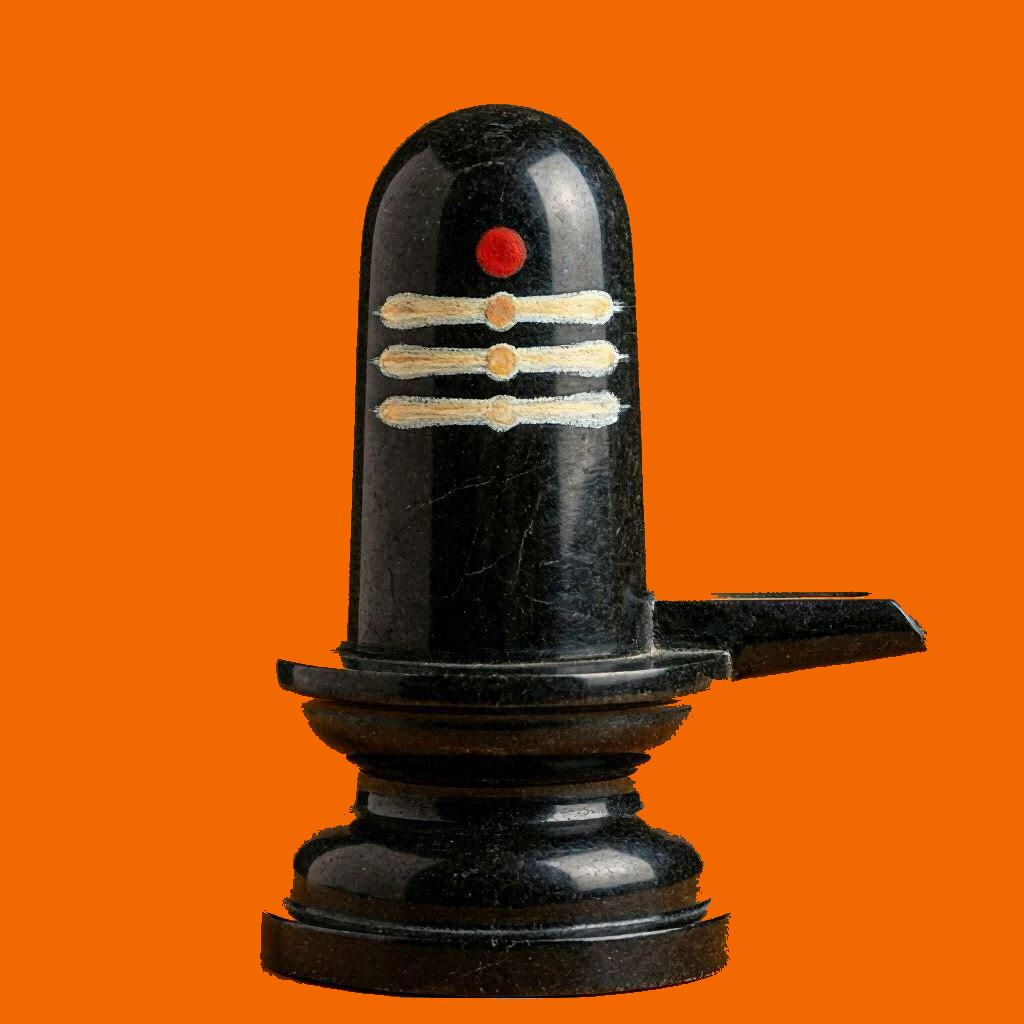
The Jyotirlinga pilgrimage is the longest, most logistically demanding, and most spiritually focused of the major Shaiva circuits. It covers nine Indian states, takes most pilgrims between three weeks and three months to complete, and crosses every climatic zone the subcontinent has — from the salt-air coast at Somnath to the high-altitude snow at Kedarnath, from the dense forest at Mallikarjuna to the dense urban devotion at Kashi Vishwanath.
This guide assumes you are seriously considering the journey. We will cover the twelve canonical shrines, the contested cases, the orders the pilgrimage is actually undertaken in, the regional dress codes and access norms, what to carry, what to leave at home, and the textual-theological frame that justifies the entire enterprise. It is long; pilgrimage guides should be.
What a Jyotirlinga is
The Sanskrit jyotir-liṅga is two roots — jyotis (light, radiance, luminosity) and liṅga (mark, sign, the iconic form of Shiva). A Jyotirlinga is therefore “a linga of light” — and the underlying claim of the entire tradition is that at these twelve specific geographic locations, Shiva manifested himself as a column of light, and that the linga installed at each site is a continuation of that original manifestation rather than a humanly-constructed object.
This is a strong claim and it is worth stating it precisely. The tradition does not say “these are twelve famous Shiva temples.” It says “these are twelve places where Shiva is self-revealed.” The difference matters: the canonical Twelve are categorically different from even very prominent Shiva temples (like Brihadeshwara or Madurai Meenakshi) because of the manifestation claim, not because of architectural grandeur or pilgrim volume.
The Twelve are enumerated in the Dvadasa Jyotirlinga Stotram, the canonical hymn of Adi Shankaracharya that catalogues them — covered in detail on our mantra page for the Stotram. The tradition holds that reciting the Stotram daily confers the same merit as having physically circuited the twelve — which is the tradition’s own honest acknowledgement that not every Shaiva is going to be able to make the physical journey in this lifetime.
For those who can, the physical journey remains the canonical Shaiva pilgrimage. Here is the map.
The canonical twelve
The Stotram’s traditional enumeration order is below, with the modern state in parentheses. We follow the Stotram order here for reference; the actual pilgrimage order most pilgrims travel is different (see further below).
| # | Shrine | Modern location | The defining feature |
|---|---|---|---|
| 1 | Somnath | Prabhas Patan, Gujarat | The first; coastal; rebuilt seven times |
| 2 | Mallikarjuna | Srisailam, Andhra Pradesh | Forest setting; Krishna river |
| 3 | Mahakaleshwar | Ujjain, Madhya Pradesh | Only south-facing; Bhasma Aarti |
| 4 | Omkareshwar | Mandhata Island, MP | Island in the Narmada |
| 5 | Kedarnath | Garhwal, Uttarakhand | Himalayan; April–November only |
| 6 | Bhimashankar | Sahyadri ghats, Maharashtra | Source of the Bhima river |
| 7 | Kashi Vishwanath | Varanasi, Uttar Pradesh | Ganga; the city of light |
| 8 | Trimbakeshwar | Nashik, Maharashtra | Source of the Godavari |
| 9 | Baidyanath | Deoghar, Jharkhand | Largest kanwariya pilgrimage in India |
| 10 | Nageshwar | Dwarka, Gujarat | Saurashtra coast |
| 11 | Ramanathaswamy | Rameshwaram, Tamil Nadu | Installed by Rama before crossing to Lanka |
| 12 | Grishneshwar | Ellora, Maharashtra | Adjacent to the Ellora caves |
A few patterns are immediately visible. Five of the twelve are in Maharashtra and Gujarat (the western coastal-and-Deccan belt); three are in Madhya Pradesh; one each in Uttarakhand, Tamil Nadu, Andhra Pradesh, Jharkhand, and Uttar Pradesh. The geography is concentrated in the central-western band of the subcontinent, with outliers at the Himalayan north and the southern tip.
This concentration is not accidental. The original Shaiva geography of the early classical period was densest along the Narmada–Godavari–Krishna river systems and through the Saurashtra coast, with later expansions north into Kashi-and-Kedarnath and south into Rameshwaram. The Twelve preserve this early geography. Visiting them is, among other things, visiting the deepest layer of historical Indian Shaivism.
The contested cases
Three of the Twelve are contested between alternate traditional sites. A serious pilgrim should know about the disputes and decide for themselves which to visit.
Baidyanath: Deoghar vs Parli
The Dvadasa Stotram names Baidyanatham. Two major candidate sites claim to be the canonical Baidyanath:
- Vaidyanath at Deoghar, Jharkhand — the popularly recognised site; draws India’s largest annual kanwariya pilgrimage every Shravan (10+ million pilgrims walking 100+ km from Sultanganj on the Ganga)
- Parli Vaijnath in Maharashtra — argued by the western Maharashtrian tradition as the older and original site
The textual and historical evidence is mixed. The Maharashtrian Vaijnath tradition has the older known continuous temple presence; the Deoghar tradition has the overwhelmingly larger contemporary pilgrim volume and Bihari-Jharkhandi popular identification. Most pan-Indian pilgrim itineraries default to Deoghar; serious historical Shaivas often visit both.
Nageshwar: Dwarka vs Aundha
The Dvadasa Stotram names Nagesham Darukavane (“Nagesha in the Daru forest”). Three sites claim to be it:
- Nageshwar at Dwarka, Gujarat — the popularly recognised and most-visited candidate
- Aundha Nagnath, Maharashtra — Maharashtra’s claim
- Jageshwar in Almora, Uttarakhand — the most contested third claimant, on grounds that the “Daruka forest” was a deodar (daru) forest of the kind found at high-altitude Almora rather than coastal Gujarat
The Dwarka claim has clear coastal Saurashtra textual roots and is dominant; the Maharashtrian and Uttarakhandi claims are minority positions held primarily within their respective regional traditions. Most standard itineraries visit Dwarka’s Nageshwar; serious Shaivas often add at least one of the two alternative sites for completeness.
Grishneshwar / Ghushmeshwar
The twelfth shrine appears in different manuscript traditions as either Grishneshwar or Ghushmeshwar. These are essentially the same word in different spellings; the site at Verul / Ellora in Maharashtra is the unambiguous reference. There is no real dispute here — only the spelling variation across textual traditions.
The order pilgrims actually travel
The Stotram’s enumeration order is not a pilgrimage itinerary. The order pilgrims actually travel in depends on three factors: where they begin, which mode of transport they use, and which season they undertake the journey in. Here are the three most common actual orderings.
The clockwise western-first ordering (most common for organised tours)
Start at Somnath, move up through Gujarat and Madhya Pradesh, swing east to Kashi, north to Kedarnath, south through Jharkhand, across Maharashtra, and close at Rameshwaram. The Dwarka shrines (Nageshwar) are usually combined with Somnath at the start.
- Somnath + Nageshwar (Gujarat coast) — two shrines, one stop, three days minimum
- Bhimashankar + Trimbakeshwar + Grishneshwar (Maharashtra) — three shrines, one extended stop, four days minimum
- Mahakaleshwar + Omkareshwar (Madhya Pradesh) — two shrines, two-three days
- Mallikarjuna (Andhra Pradesh, Srisailam) — one shrine, two days
- Ramanathaswamy (Tamil Nadu, Rameshwaram) — one shrine, two-three days (often combined with Madurai)
- Baidyanath (Jharkhand, Deoghar) — one shrine, two days (or much longer during Shravan)
- Kashi Vishwanath (Uttar Pradesh, Varanasi) — one shrine, two-three days (most pilgrims extend this significantly)
- Kedarnath (Uttarakhand) — one shrine, three days minimum from base; full Char Dham trip if extended
This ordering minimises backtracking and is what most package tours and IRCTC Jyotirlinga rail itineraries follow. Total time: three to four weeks at a steady pace.
The seasonal-first ordering (the locally aware approach)
A pilgrim who lives in India and is doing the circuit over several years often inverts the standard logic and travels each shrine in its peak observance season:
- Kedarnath in late May (just after the dham reopens; before peak monsoon crowds)
- Kashi during Shravan (the peak Monday processions through the city; queues are city-long but the atmosphere is unmatched)
- Mahakaleshwar for the Bhasma Aarti at Maha Shivaratri (book the four-prahar puja months in advance)
- Baidyanath during Shravan (the kanwariya pilgrimage)
- Ramanathaswamy in the Tamil month of Panguni (the sacred bath at the 22 wells is most observed then)
- The Maharashtra shrines around the local festival dates
This ordering takes longer (years rather than weeks) but each visit is undertaken with the temple at its most charged, the rituals most fully observed, and the pilgrim’s preparation maximally aligned with the local Shaiva calendar. Many lifelong Shaivas prefer this mode.
The two-or-three-at-a-time ordering (the working person’s pilgrimage)
A working person with limited leave does the circuit in clusters over five to ten years:
- Year 1: Somnath + Nageshwar (long weekend from Mumbai or Ahmedabad)
- Year 2: Bhimashankar + Trimbakeshwar + Grishneshwar (week from Pune/Mumbai)
- Year 3: Mahakaleshwar + Omkareshwar (week from Delhi via train)
- Year 4: Kedarnath (full week required for the trek and acclimatisation)
- Year 5: Mallikarjuna (long weekend from Hyderabad/Bangalore)
- Year 6: Ramanathaswamy (week from Chennai)
- Year 7: Baidyanath (long weekend from Kolkata; longer during Shravan)
- Year 8: Kashi (week — Kashi should never be rushed)
This is, frankly, the realistic mode for most pilgrims today. It also has the advantage that each cluster can be undertaken with the depth and the local cultural immersion that a multi-month sprint cannot offer.
What to bring
A serious Jyotirlinga circuit is not a sightseeing tour. The packing list is shorter than for a leisure trip but more specific.
Clothing. Two pairs of cotton kurta-pajama or cotton dhoti for the men; two pairs of cotton sari or salwar-kameez for the women. Synthetic fabrics are unwise (some traditional temples enforce dress codes that prohibit synthetic clothing). Pack for the climatic extremes — Kedarnath in May is sub-zero at night; Rameshwaram in May is 35°C and humid. Layered cotton is the universal answer.
Footwear. Slip-on sandals for everything. No laces (most temples require you to remove shoes at the threshold; the queue moves faster if you can do it in one motion). Leather is prohibited inside many southern temples — synthetic-strap sandals avoid the issue. Bring one cheap pair of disposable socks for the rough stone temple grounds at the larger shrines.
A small puja kit. A copper kalash (small pot) for water, a packet of dried bilva leaves, a packet of bhasma (sacred ash), incense sticks, a small ghee lamp with cotton wicks, a small box of kumkum and chandan paste. Most pilgrims pick these up at the first shrine and carry them through the entire circuit. They are also available at every shrine, but the continuity of carrying your own is part of the practice.
A copy of the Dvadasa Jyotirlinga Stotram. Recited at each shrine in front of the linga. Most pilgrims have it memorised by the third or fourth shrine; carrying a printed text for the early visits is wise.
Documentation. Government photo ID is required for entry to several shrines, especially Kedarnath (where biometric registration is now standard). Carry an Aadhaar card or passport throughout.
Cash in small denominations. Many shrines accept digital payment for the major offerings but the small offerings (the priest who gives the prasad, the boatman who takes you to Mandhata Island at Omkareshwar, the porter at Kedarnath) work in cash. Hundred-rupee notes in quantity are the working currency of pilgrimage.
A small notebook. Each shrine has a quiet hour somewhere in its routine — the post-aarti morning, the mid-afternoon between darshans. Sitting quietly in that hour and writing what the shrine has been for you is, in the long view, one of the most valuable preserves of the entire pilgrimage.
What to leave at home
Cameras and excessive photography. Most inner sanctums prohibit photography entirely; many shrines prohibit it across the whole inner-courtyard area. Carrying a serious camera draws attention from temple security and complicates the queue. A phone for occasional outside-the-sanctum shots is enough.
Strong opinions about other people’s devotion. Indian temple culture is loud, crowded, intensely physical, and entirely uninterested in the foreign tourist’s preferences about quiet contemplative worship. Make peace with this before arrival. The chaos is the worship in many places, not an obstacle to it.
Detailed itinerary expectations. Trains delay; weather closes Kedarnath unexpectedly; queues at Mahakaleshwar can swallow a day. The pilgrimage tradition has always factored in unscheduled time. Leave at least 25% of your trip duration unallocated.
Performative religiosity. The shrine staff and the local devotees can tell instantly when a visitor is performing rather than worshipping. The kindest position is to bring whatever genuine devotion you have, however imperfect, and let it be visible only in your conduct. The posture is quiet presence, not display.
Dress code and access by region
The regional variations matter, and a pilgrim who hasn’t internalised them will repeatedly run into friction.
Kerala-style temples (none in the Twelve, but worth knowing). Strict dress code; many shrines require men to remove shirts and enter bare-chested with only a dhoti; women in saris only, no salwar-kameez. Not relevant to the Twelve themselves but relevant if your itinerary passes through Kerala.
Tamil Nadu temples (Ramanathaswamy). Men in dhoti and angavastram (upper cloth); women in sari or salwar-kameez. No leather inside the sanctum. The sacred bath at the 22 wells (theerthams) precedes the sanctum darshan — budget two hours minimum.
Maharashtra temples (Bhimashankar, Trimbakeshwar, Grishneshwar). Less formally strict; modest Indian or Indian-fusion clothing is fine. The Trimbakeshwar inner sanctum is restricted to men in dhoti only — women view the linga from the outer chamber.
Madhya Pradesh (Mahakaleshwar, Omkareshwar). The Bhasma Aarti at Mahakaleshwar requires advance booking (months ahead for Maha Shivaratri season) and a strict dress code for men (dhoti, no upper garment) for the front-row “abhishekam” position. The general darshan is more relaxed.
North Indian (Kashi Vishwanath, Baidyanath, Kedarnath). The most accommodating in terms of dress code — any modest clothing works. Kashi has had a major corridor renovation (the Vishwanath Corridor opened in late 2021) which has changed the queue logistics significantly; bring patience.
Western coastal (Somnath, Nageshwar). Modern, accommodating, large parking, modest dress sufficient.
Andhra (Mallikarjuna, Srisailam). Traditional South Indian temple etiquette; the temple is set in the Nallamala forest and the surrounding ambience is more remote than most of the others. Plan for a slower pace.
Specific practical notes by shrine
Kedarnath (the most demanding)
Open only April–November. The temple is at 3,583m — high enough that altitude sickness is a real risk for visitors arriving from the plains. Acclimatise for at least one full day at Sonprayag (1,900m) or Gaurikund (1,980m) before the trek. The trek itself is 16km from Gaurikund and takes most pilgrims a full day; helicopter services are available but advance-booking is required and weather cancellations are frequent. The dham closes after Bhai Dooj in late October or early November and reopens in late April or early May; check the official Badrinath-Kedarnath site for the year’s exact dates.
Mahakaleshwar (the most precisely scheduled)
The Bhasma Aarti is the only daily ritual of its kind in any Jyotirlinga — pre-dawn application of sacred ash to the linga, dating back centuries, with specific dress and posture requirements for the front-row attendees. Standard tickets sell out weeks in advance; Maha Shivaratri tickets sell out months in advance. The temple gates open at 03:00. If you have not booked the aarti seating in advance, you can still attend the general viewing from the outer hall.
Kashi Vishwanath (the most logistically complex)
The Vishwanath Corridor renovation has streamlined the queues but the corridor architecture is now extensive — budget a full half-day for the darshan even at off-peak times. The pre-dawn Mangala Aarti is the most attended; the evening Sapt Rishi Aarti (19:00) is the second-most. During Shravan, every Monday becomes a full-day event. The river-side perspective from a boat on the Ganga at dawn is the second pilgrimage that most Kashi visitors undertake — the temple in the morning, the river at sunrise, the cremation ghats at dusk. Plan three days minimum.
Ramanathaswamy (the longest temple)
The temple has the longest corridor of any temple in India (over 1,200 metres of pillared hallway). The sacred bath at the 22 theerthams (wells) precedes the sanctum darshan and is a real ritual — the temple priests pour water from each well in sequence over the bathing pilgrim; the entire sequence takes 90 minutes to two hours and is performed in modest Indian wear. The full pilgrimage requires a minimum of two full days; many pilgrims extend to a third for the Dhanushkodi end-of-the-island visit.
Baidyanath (Shravan vs the rest of the year)
The Sawan Mela in Shravan is the largest single religious gathering in India (larger than any individual Kumbh Mela in raw daily numbers). Pilgrims walk 105 km from Sultanganj on the Ganga to Deoghar, carrying water in kanwars (decorated bamboo poles), to pour on the linga. The entire route is lined with rest stations, free food, and continuous community. Off-Shravan, the temple is quiet, the visit takes a single morning, and the experience is entirely different. Both are worth doing for the contrast.
Mallikarjuna (the forest shrine)
Set deep in the Nallamala forest on the Krishna river, the Srisailam shrine has a more remote and reflective ambience than any of the others. The temple itself is paired with the Bhramaramba shrine to the Devi — the only Jyotirlinga that is also a Shakti Peetha. The Brahmotsavam at Maha Shivaratri is the year’s central observance. Access is by road from Hyderabad (210 km) or Vijayawada (280 km); the last 50 km are forest road and timing the drive to arrive in daylight is wise.
The spiritual frame
A pilgrimage is not, in the Shaiva tradition’s own self-understanding, an act of tourism with religious flavour. It is a sadhana — a sustained practice — that progressively reorients the practitioner toward Shiva. The shrines do not change the pilgrim by mere visit; they change the pilgrim through the cumulative weight of repeated approach, repeated darshan, repeated departure with the practice carried in the body.
This is why the Dvadasa Stotram is the central textual frame of the pilgrimage. Reciting the Stotram at each shrine, in front of the linga, with the awareness that the verse you are reciting names the very shrine you are standing in front of, is one of the deepest available Shaiva practices. The Stotram becomes, by the twelfth shrine, not a hymn you are reciting but a hymn you are in.
For a serious pilgrim, three additional Shaiva texts pair naturally with the circuit:
- The Lingashtakam — recited at the linga of each shrine, with eight verses each bowing to a different aspect of the linga form
- The Rudrashtakam — recited as the daily morning hymn through the pilgrimage period, ideally before setting out from each lodging
- The Bilvashtakam — recited while offering bilva leaves at each linga
Together, the four hymns constitute a complete daily Shaiva textual practice for the pilgrim. By the end of the circuit, all four are usually memorised.
What the pilgrimage produces
The honest answer is that nobody can promise you in advance what your pilgrimage will produce. The tradition is full of accounts of pilgrims for whom one specific shrine — and not always the most famous one — became the pivot of an entire life’s reorientation. Others complete the circuit with steady devotion and report that the deepening was gradual, accumulated, and only visible in retrospect over years. Both are honest accounts.
What can be said is that the structure of the pilgrimage tends to produce certain reproducible effects:
-
A first-hand recognition that Shiva is geographically distributed across the subcontinent in a way that the abstract textual concept of “Shiva” can never fully convey. The shrines are different from each other in atmosphere, ritual, regional culture, and devotional flavour — and Shiva is somehow present in all of them, in each one as the specific Shiva that the local lineage has formed around. This is the practical understanding of bhinna-abhinna (different-yet-not-different) that Shaiva theology asserts at the philosophical level.
-
A re-anchoring of the daily home practice. Pilgrims who return from a Jyotirlinga circuit almost universally find that their morning practice deepens and that their sense of what they are doing each morning has been re-grounded by the encounters at the shrines.
-
A sense of being part of a tradition larger than the individual practitioner. Standing in a queue at Kashi at 4am with several thousand other pilgrims who have come for the same reason, from across the country and the world, in a queue that has been forming at the same temple for over a thousand years, dissolves a particular kind of individualistic loneliness that contemporary life trains.
These are not promises. They are what pilgrims report.
Closing
If you have read this far, you are taking the possibility of the pilgrimage seriously. The next concrete step is small: pick one shrine, the one nearest to you geographically or the one that has drawn you most strongly in reading this guide, and plan a trip to that single shrine for the next available auspicious time.
The full circuit can come later. It always can. Most pilgrims who complete the Twelve started with one, and only after that one had genuinely moved them did the others become a real intention rather than an idea.
The Twelve have been there for centuries. They will be there for the next centuries. The question is not whether you ever do the full circuit. The question is whether you visit the first one — whichever one is yours to begin with — soon enough to find out what the Jyotirlinga pilgrimage actually is for the person you are now.
Om Namah Shivaya.