The opening verse
त्रिदलं त्रिगुणाकारं त्रिनेत्रं च त्रियायुधम्। त्रिजन्मपापसंहारम् एकबिल्वं शिवार्पणम्॥
In IAST:
Tri-dalaṃ tri-guṇākāraṃ tri-netraṃ ca tri-yāyudham, tri-janma-pāpa-saṃhāram eka-bilvaṃ śivārpaṇam.
In English:
Three-foliate, the form of the three gunas, the three-eyed one, the wielder of three weapons, the destroyer of the sins of three births — one bilva, offered to Shiva.
The hymn’s central move
The Bilvashtakam is a sustained meditation on the number three. Each verse takes the tri-dala (three-leaflet) structure of the bilva and reads it as sign of some triad in Shaiva theology, cosmology, or biography:
| Verse | The three-in-one read as |
|---|---|
| 1 | Three gunas, three eyes, three weapons, sins of three births |
| 2 | Three rivers (Ganga, Yamuna, Saraswati) and three sacred fires |
| 3 | Three Vedas (Rig, Yajur, Sama) and three sacrifices |
| 4 | Three syllables of OM (A-U-M) and three states (waking, dream, deep sleep) |
| 5 | Three sandhyas (dawn, noon, dusk) and the three twilight prayers |
| 6 | Three lokas (earth, atmosphere, heaven) and three forms of time |
| 7 | Three deities of the trimurti (Brahma, Vishnu, Shiva) and three creations |
| 8 | The destruction of all triads in the closing offering |
By the end the chanter has been shown that the small three-leaflet bilva held in the hand is, by analogical density, the entire structured universe. And what is offered is not the universe — what is offered is one bilva. The eighth verse’s closure is the recognition that the cosmic symbolism ultimately serves a simple devotional act: a leaf, a linga, a bow.
The bilva tree itself
The bilva (Aegle marmelos) is no mere theological prop. It is a useful tree in its own right — its hard-shelled fruit is edible and traditionally medicinal (its pulp is used in Ayurveda for digestive complaints), its wood is used for sacred fire and for temple architecture, and its dense shade is among the most prized in the hot Indian summer. The tree is one of the slow-growing hardwoods of the subcontinent, with mature specimens living for centuries.
In Shaiva tradition the bilva tree is itself considered an incarnation of Shiva’s consort — sometimes named as Lakshmi, sometimes as Parvati, depending on the regional tradition. Many old Shiva temples in South India have a bilva tree planted on the temple grounds; the tree is worshipped as a living embodiment of the goddess, the leaves it sheds offered back to the linga it stands beside. The relationship is circular: Parvati grows the leaf, the devotee offers it to Shiva, Shiva receives the offering from his own consort. The Bilvashtakam holds this circle in language.
When and how to offer
The canonical sequence in domestic and temple Pradosham worship:
- Bathe the linga (abhishekam) with water, milk, or panchamrita
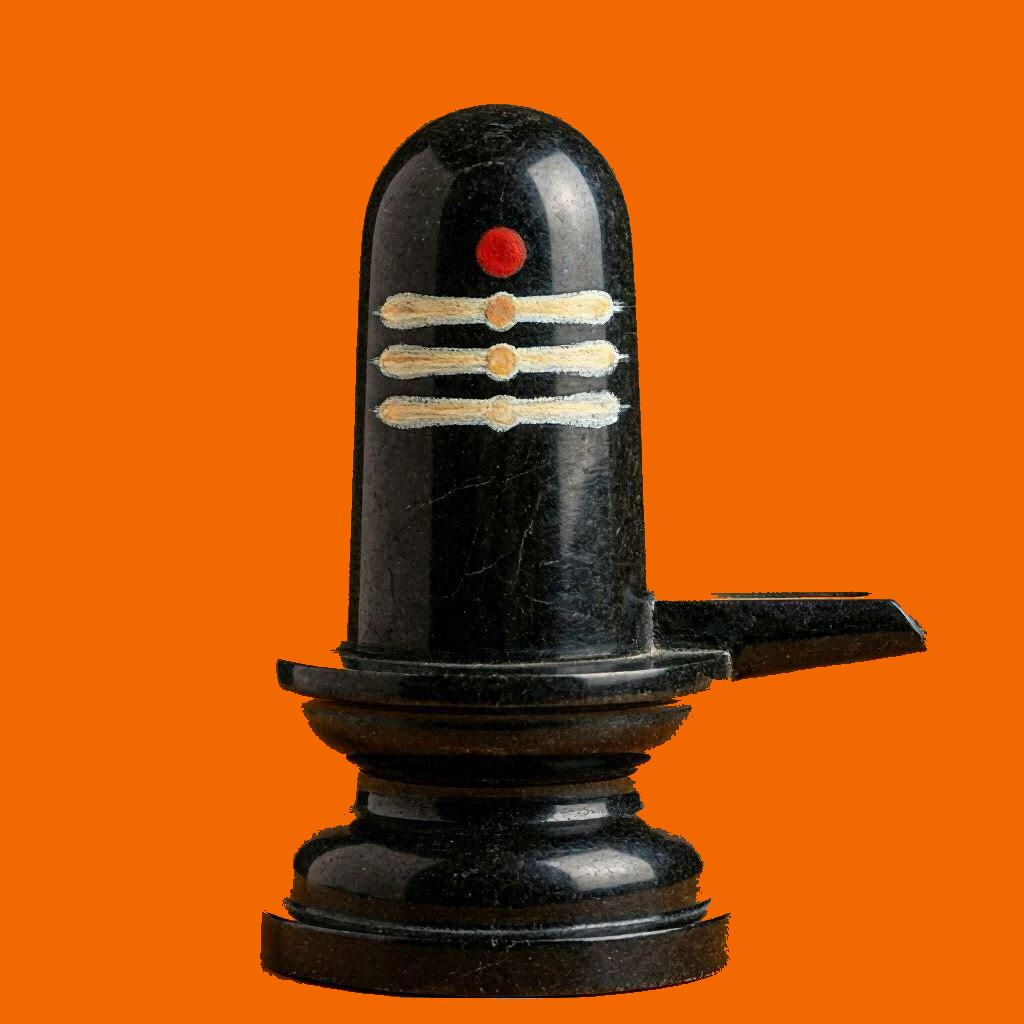
- Apply vibhuti (sacred ash) to the linga in three horizontal stripes
- Offer bilva leaves, one at a time, while reciting the Bilvashtakam. The smooth side of the leaf touches the linga; the three leaflets point downward (towards the chanter, not away)
- Light the deepa and wave the camphor aarti
- Close with the Lingashtakam or another short Shaiva hymn
Some traditions hold that 108 bilva leaves should be offered on Pradosham; others permit fewer, even as few as a single leaf if it is offered with full attention. The number matters less than the steadiness.
Tradition around when not to pick
Bilva is considered sacred enough that picking is regulated by tradition:
- Do not pick on chaturthi (4th tithi), ashtami (8th), navami (9th), chaturdashi (14th), or amavasya (new moon)
- Do not pick at night
- Do not pick when the tree is wet from rain (let the leaves dry first)
- Do not break branches — only pick fallen leaves or carefully detach individual leaflets from the petiole
- Previously-offered leaves can be re-offered on subsequent days if kept clean and unbroken — the leaf does not “expire” in the way most flower offerings do
These restrictions are observed most strictly in temple traditions and among rigorous householder practitioners; they are observed more loosely in casual devotional practice. None of them are mentioned in the Bilvashtakam itself; the hymn is the song that accompanies the offering, not the rules that govern it.
Practice
The Bilvashtakam is short (about three minutes recited at moderate pace), metrically simple (anushtubh chandas, the same metre as much of the Mahabharata), and built around the repeated closing line — all features that make it accessible to a beginner.
A useful starting practice:
- Learn the refrain (eka-bilvaṃ śivārpaṇam) first. It will close every verse and is the anchor.
- Learn the first verse next — the triads are the easiest to remember because they all begin with the syllable tri
- Add a verse a day across eight days
By the end of the second week, the practitioner can recite the full hymn while making bilva offerings without losing track of either the hymn or the leaves. That is the goal: not virtuosity, but the seamless union of chant and gesture.
A small closing
The Bilvashtakam is, among the Shaiva short hymns, the most physically grounded. It is not about Shiva’s hair, or his dance, or his metaphysics. It is about a leaf. A specific leaf, with three leaflets, picked from a specific tree, placed on a stone. The whole of Shaiva theology, the hymn insists, is present in that gesture — but the gesture remains a gesture, and the leaf remains a leaf.
This is part of why the Bilvashtakam is so beloved by householders. It does not ask the practitioner to transcend the body or master a metre. It asks the practitioner to find a leaf, hold it well, and offer it. Everything else — the cosmic resonance, the eight-fold bowing, the destruction of the sins of three births — accumulates around that small concrete act.