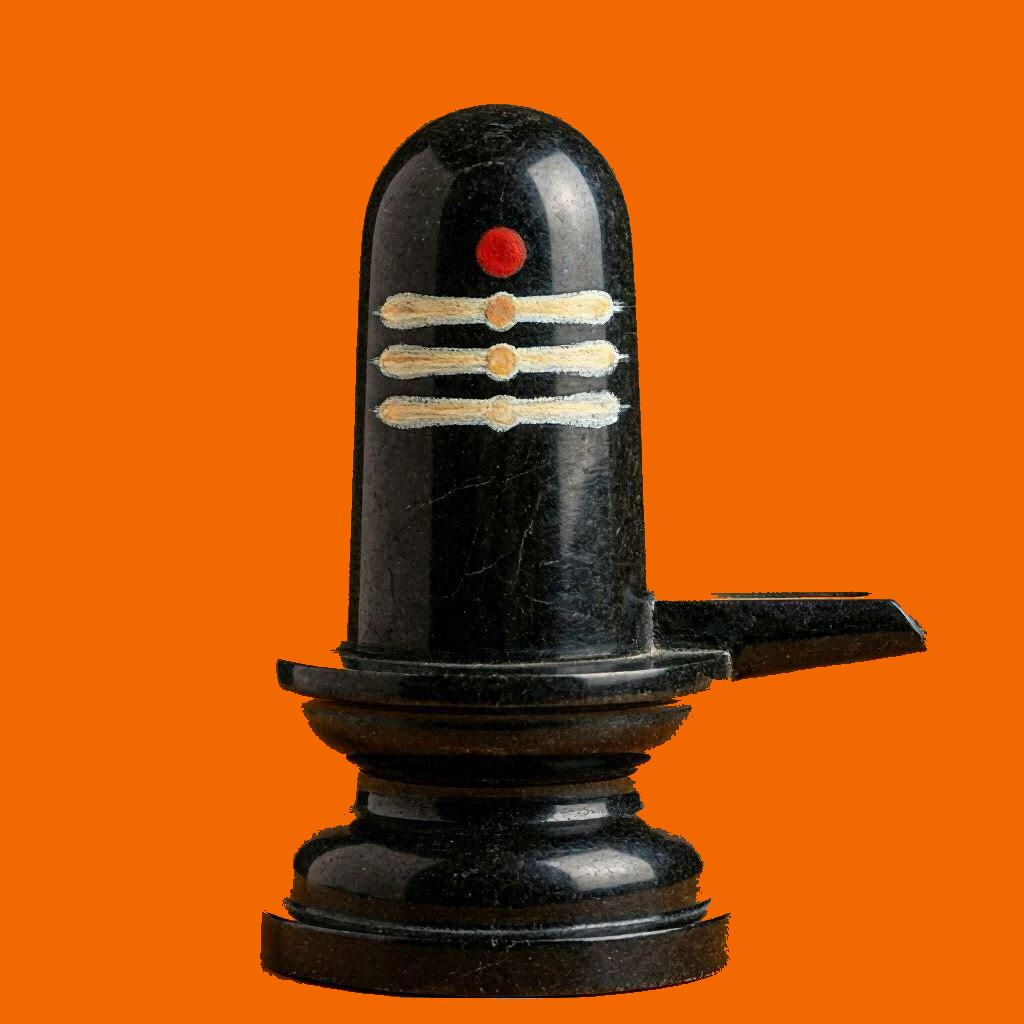
If you grow up in a household that keeps it, the Monday fast for Shiva — Somvar Vrat — arrives in your life before the philosophy does. A grandmother eating once a day on Mondays. An aunt who will not touch onion or garlic between sunrise and the sighting of the moon. A father who breaks the day’s fast only after a visit to the local Shiva temple. The practice is everywhere in Hindu domestic life, kept by tens of millions of people every week, and yet rarely explained beyond “it is good for Shiva”.
This essay is for the practitioner who wants to keep Somvar Vrat well — or who has been keeping it for years and wants the ground under it firmer. It is also for the reader from outside the tradition who is wondering what is actually happening when half a billion Hindus arrange their Mondays around a fast.
We will cover: what Somvar Vrat is, the four traditional variations, the rules that matter and the ones that don’t, what happens during the day, what to expect over a year of keeping it, and where the practice fits in the larger Shaiva calendar.
Why Monday
The Sanskrit word Somvar (सोमवार) means “Soma’s day” — the day of the Moon. In the Puranic correspondence between weekdays and deities, Monday belongs to Chandra (the Moon), and the Moon is one of Shiva’s iconographic attributes. The crescent moon (chandrakala) rests on Shiva’s matted hair in every traditional depiction. The mythology says that when Daksha’s curse caused the Moon to begin wasting away, the Moon took refuge with Shiva, who placed the crescent on his head and arrested the wasting at one-sixteenth — the form the Moon would have had on the day of his collapse.
The practical inheritance of that mythology is the weekly correspondence: Monday is the Moon’s day, the Moon is Shiva’s ornament, so Monday is the day on which Shiva-worship is most amplified. The Vedic and Puranic texts agree on this — Somvāre Śivam arcanāt (“by worshipping Shiva on Monday”), the Skanda Purana says, paramāṃ gatim āpnoti (“one attains the supreme destination”).
The doctrinal claim is that any practice offered to Shiva on a Monday is amplified. The fast is the most common form of offering — chosen because it is available to anyone, regardless of resources, regardless of how far they live from a temple.
What Somvar Vrat is
A vrat is a vow. Specifically, a self-imposed discipline kept for a defined duration in service of a defined intention. The structure of a vrat — fast, abstention, mantra, conclusion — is a standard architecture across Hindu domestic religion.
Somvar Vrat is the simplest of all vrats: a fast on Mondays, kept toward Shiva, broken after evening puja.
The simplicity is deceptive. Within that single sentence are at least four traditional variations, each with its own rationale and intended outcome.
1. Sampurna Somvar Vrat (the complete Monday fast)
A full fast from sunrise to evening sandhya (twilight). No food, no liquids except water. The day is given to mantra recitation, temple visits where possible, and quiet domestic work.
This is the most rigorous version. Traditionally kept by adult householders without medical contraindications, on selected Mondays — usually those falling in Shravan, in the pradosham fortnights, or in personal anniversaries.
The point of the complete fast is not endurance. It is removing the daily reset of meal-time so the day’s attention is uninterrupted. You will notice, if you have ever kept one, that hunger after the second skipped meal becomes a steady background tone rather than a sharp signal — and the mind that has been stripped of meal-anticipation grows quiet in a way that is hard to manufacture deliberately.
2. Phalahara Somvar Vrat (the fruit-only Monday fast)
The most commonly-kept version. From sunrise until evening puja: fruit, milk, water, and certain vrat-friendly foods (sabudana, singhada flour, sendha namak — rock salt rather than sea salt). Cooked grains, lentils, onion, and garlic are avoided.
This is the version most working adults keep. It is sustainable across the full work-day, demands real but not extreme discipline, and lets the practitioner stay clear-headed for office and family duties.
The doctrinal grounding for the food rules is satvic — the foods are chosen because they keep the mind clear rather than dulled. Onion and garlic, in the Ayurvedic classification, are tamasic (clouding); cooked grains are heavy; salt-fermentation products are stimulating. The fruit-and-milk diet leaves the body fueled and the attention available.
3. Ekashana Somvar Vrat (the once-a-day Monday meal)
One meal, taken after evening puja. The rest of the day is on water (or, in stricter versions, on water and fruit only). The meal that breaks the fast is traditionally sattvic and modest — khichdi, fruit, a simple curd.
This version is the one most often kept by older practitioners and by householders who find the complete fast medically unsustainable but want something more rigorous than phalahara. The “one meal” structure is borrowed from the wider Hindu monastic tradition — most renunciate orders eat only once a day, every day.
4. Solah Somvar Vrat (the sixteen-Monday vow)
A defined-duration vow rather than an ongoing practice. The practitioner commits to keep Somvar Vrat — typically the phalahara version — for sixteen consecutive Mondays toward a specific intention. The intention is named at the start of the first Monday’s puja, kept silent for the duration, and the vow is udyapaned (concluded with a closing ritual) on the sixteenth Monday.
Solah Somvar is the version most often kept by young women before marriage (the intention named is usually a worthy husband), by parents praying for a specific outcome for a child, and by anyone who wants the structure of a defined-duration discipline rather than an open-ended one.
The number sixteen has its own logic — sixteen is the count of kalas (phases) the Moon traverses through a full lunar cycle, and the sixteen Mondays are understood to complete a kala-cycle of the practice.
The day of the fast
For the practitioner. The traditional shape of a Somvar Vrat day:
Before sunrise — bathe. The Hindu domestic tradition treats the pre-dawn bath as the threshold between ordinary days and observance days. Cold water is traditional, warm water is permitted.
At sunrise — sankalpa. Stand before the household shrine, fold the hands, and say out loud the intention of the day’s fast. The Sanskrit formula is mama upātta samasta pāpa kshaya dvārā śrī parameśvara prīty artham somvāra vratam ahaṃ kariṣye (“for the destruction of my accumulated misdeeds and for the pleasure of Shiva, I will keep the Monday fast today”). If you don’t know Sanskrit, the same intention in your own language is accepted by the tradition. The act of saying it out loud is what initiates the vrat — not the silent intention.
Morning — work, but with a quiet floor under it. The traditional teachers describe the morning of a fast-day as kriya-sahit-japa — work accompanied by mantra. The mantra runs in the background. Om Namah Shivaya, repeated mentally between actions, is the universal default.
Midday — if temple-accessible, a visit. Even ten minutes. The Monday-mid-day darshan is considered especially auspicious in the Shaiva calendar. If you cannot get to a temple, the household shrine is sufficient — pour water on the shrine’s lingam (or on the image of Shiva if there is no lingam), offer one or three bilva leaves if available, recite the Maha Mrityunjaya mantra three times.
Evening — the main puja. This is the central observance of the day. Light a lamp. Pour water on the lingam (real or pictorial). Recite the Rudrashtakam or Shiva Chalisa if you have memorised one. Read or recite the Somvar Vrat Katha — the traditional story, told on every Monday in keeping households, of the merchant’s daughter and the boon and the test of the husband and the goddess Parvati’s intervention. The story has many local variants; any reasonable version is acceptable.
Breaking the fast — after the evening puja. The traditional meal is prasadam first (the food that was offered at the puja), then a simple cooked dinner. Avoid heavy food, fried food, alcohol, non-vegetarian food. The body has spent the day quiet; the meal that breaks the fast should not undo that.
Before sleep — a closing pranam at the shrine, a brief gratitude, sleep.
What changes over a year
This is the part most practitioners discover for themselves over time, but it is worth saying explicitly.
A year of Somvar Vrat — fifty-two Mondays kept with reasonable consistency — produces three changes that the practitioner will start to recognise.
The Monday becomes a stabilising day. Most weeks have one day that quietly anchors the rest. For households that keep Somvar Vrat, that day becomes Monday — partly through the practice itself, partly through the rhythm of the week reorganising around it. Decisions made on Monday tend to come out cleaner. Difficult conversations held on Monday tend to land better. The day acquires the quality of being held.
The body recalibrates. A weekly day of light eating, sustained for a year, resets metabolic patterns in measurable ways. This is not the point of the practice — but it is a documented secondary effect. Cardiovascular markers improve, insulin sensitivity improves, the digestive system gets a regular reset. The tradition is not naive about this; the texts mention bodily benefits as a side-outcome and explicitly warn against confusing them with the primary outcome.
The mantra deepens. The mantra that has run in the background of fifty-two Mondays acquires a quality that the same mantra recited for the same total duration but spread across all seven days does not. The traditional teachers describe this as anuṣṭhāna phala — the fruit of regular observance — and the doctrinal claim is that the regularity itself is what produces the deepening. The Monday becomes the spine.
These three changes are what the tradition is pointing at when it promises that a year of Somvar Vrat transforms the householder. The transformation is real and is also gradual. There is no fireworks moment. There is, instead, the slow re-organisation of a life around a weekly anchor that the practice provides.
When you cannot keep it
Pragmatic notes from the tradition.
Medical contraindications. Diabetes, pregnancy, breastfeeding, recovery from surgery, eating disorders — the tradition is unambiguous that the body comes first. Substitute manasik vrat (mental vrat): keep the mantra, keep the temple visit, do not keep the food fast.
Work conflicts. Travel, exams, surgery, a day of heavy physical labour — substitute the phalahara version (fruit and milk) for the complete fast.
Forgotten Mondays. If you forget, you have not broken the vrat — vrat-bhanga (vow-breaking) requires deliberate transgression. Simply resume the next Monday. The Solah Somvar exception: if you are keeping the sixteen-week vow and miss a Monday, traditional practice is to extend the vow by one additional Monday at the end rather than restart.
Travel. A vrat-day spent travelling can still be a vrat-day. Fast on water and fruit, recite the mantra mentally, do darshan at any Shiva temple you pass, keep an evening lamp in your hotel room. The tradition is portable.
Somvar Vrat in the larger calendar
Somvar Vrat is the weekly version of practices that have seasonal peaks elsewhere in the Shaiva calendar.
Shravan Somvar — the four to five Mondays of the lunar month of Shravan (usually July–August) — are considered the most powerful Mondays of the year. The whole of Shravan is dedicated to Shiva; the Mondays within it concentrate that dedication. Many households who do not keep Somvar Vrat year-round still keep it through Shravan.
Pradosham — the twice-monthly trayodashi observance — sometimes coincides with a Monday, producing a Som-Pradosham day of particular intensity.
Maha Shivaratri — the annual peak — sometimes falls on or near a Monday, in which case the Monday-Shivaratri coincidence is treated as exceptionally auspicious.
The pattern across all these is the same: rhythm is the carrier. The weekly rhythm of Somvar, the fortnightly rhythm of Pradosham, the annual rhythm of Shivaratri — together they make a year that is organised around Shaiva practice rather than visited by it.
Closing
Somvar Vrat is not, in the end, about food. The food restriction is the scaffolding the practice uses to do its actual work, which is to remove a day each week from the ordinary economy of meal-time and devote it to a specific kind of attention. The fast is the means by which the day is held open.
For the practitioner who has the daily Om Namah Shivaya steady and is wondering what the next layer is — Somvar Vrat is the most accessible and most rewarded answer the tradition offers. Start with phalahara. Keep it for sixteen Mondays as a Solah Somvar with a named intention. Then decide, on the seventeenth Monday, whether to continue.
The tradition will tell you what happens next. You will not need to consult a text.
Practical tools for keeping a weekly Shaiva rhythm — including audio mantras, the 21-day Sankalpa email course, and a yatra planner across 116 Shiva temples — live inside the Shiv Darshan app. The Monday fast is yours to keep; the supports for the rest of the practice are there when you want them.