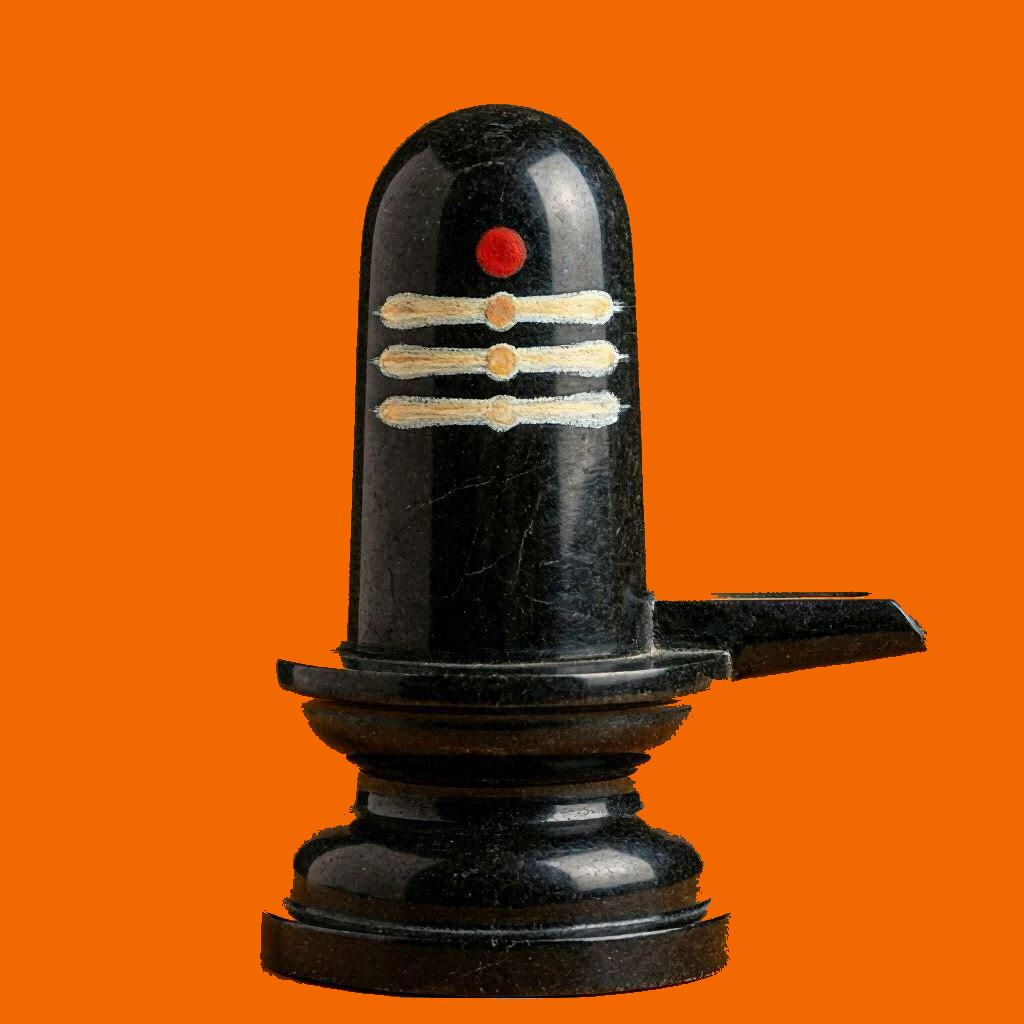
The first verse
नागेन्द्रहाराय त्रिलोचनाय भस्माङ्गरागाय महेश्वराय। नित्याय शुद्धाय दिगम्बराय तस्मै नकाराय नमः शिवाय॥
In IAST:
Nāgendra-hārāya tri-locanāya bhasmāṅga-rāgāya maheśvarāya, nityāya śuddhāya digambarāya tasmai na-kārāya namaḥ Śivāya.
In English:
To the one garlanded with the serpent-king, the three-eyed, his body smeared with ash, the great lord — eternal, pure, sky-clad — to that ‘Na’-form, salutations to Shiva.
What the hymn does
The Panchakshara Stotram is a structural marvel. It takes the five-syllable mantra Na-Mah-Shi-Vā-Ya and assigns each syllable a single verse. Each verse:
- Opens with the syllable as the first sound of the first word
- Names five iconographic and theological attributes of Shiva that begin with that syllable (or are gathered around its register)
- Closes with the identical refrain tasmai [syllable]-kārāya namaḥ Śivāya — “to that [syllable]-form, salutations to Shiva”
By the end the chanter has bowed five times — once for each of the five syllables they have been chanting all along — but now with the cosmology of each syllable made explicit. The mantra goes from felt to understood without losing its felt quality.
What each verse celebrates
| Verse | Syllable | Shiva named as |
|---|---|---|
| 1 | Na | Serpent-garlanded, three-eyed, ash-smeared, sky-clad (digambara, “clothed in the directions”) |
| 2 | Mah | Bathed by the Ganga from Mandakini, worshipped with sandal paste, called Mandara-mukhya |
| 3 | Shi | Husband of Gauri, lord of pramatha-ganas, smeared with sandal and saffron |
| 4 | Vā | Worshipped by the sages Vasishtha, Agastya, and Gautama, the cosmic-form deity |
| 5 | Ya | Of the Yaksha form, rider of the bull, beloved of all the gods |
Note that verse 4 leans on the rishi-tradition explicitly — Shiva worshipped by the same sages who composed the Vedic hymns. Shankara is positioning Shaiva devotion as continuous with the Vedic seer-line, not a competing or later tradition. This is part of what made his synthesis durable: he treated sectarian devotion as a face of the same non-dual truth he taught in the commentaries.
The five syllables as elements (Shaiva interpretive layer)
The Panchakshara Stotram does not name the five-elements correspondence that we discussed in the Om Namah Shivaya entry — it names different attributes for each syllable. But in living Shaiva practice the two interpretive layers (the elements layer, and the iconography layer this hymn supplies) are held together. The chanter who has internalised both can hear, in the syllable Na:
- The earth element (from the elements layer)
- The serpent-garlanded ash-smeared digambara form (from this hymn)
- And, of course, the five-syllable mantra they are chanting
The hymn is one of three or four interpretive frames the tradition has built around the mantra. None of them exhausts it. All of them deepen it.
Adi Shankara as composer of short bhakti hymns
This hymn is a useful entry point into a larger pattern in Shankara’s authorship. The same philosopher whose commentaries on the Brahma Sutras, the Upanishads, and the Bhagavad Gita laid the foundation for classical Advaita Vedanta also composed:
- The Bhaja Govindam (a Vaishnava bhakti hymn warning against worldly attachment)
- The Saundarya Lahari (a hundred verses to the Goddess)
- The Dakshinamurti Stotram (to Shiva as silent guru — see our Dakshinamurti entry)
- The Nirvana Shatkam (six verses of Advaita identity — Shivoham, Shivoham — see our Nirvana Shatkam entry)
- The Panchakshara Stotram (this hymn)
- And many more, across all the major sectarian traditions of his day
The pattern is consistent: high non-dualism in the prose commentaries, warm sectarian bhakti in the verse hymns. Shankara’s view was that the two are not in tension. The hymn to Shiva-as-Shiva and the philosophical recognition of Shiva-as-the-Self are two arms of the same approach.
When and how to recite
The Panchakshara Stotram fits naturally into existing Shaiva practice:
- After Om Namah Shivaya japa. One mala (108 chants) of the mantra, then one recitation of the stotram. The hymn takes about three minutes; the full sequence is well under twenty.
- On Pradosham. Often paired with the Bilvashtakam and Lingashtakam in the twilight ritual.
- On Somvar. Many practitioners add it to their weekly Monday practice.
- At Maha Shivaratri. One recitation between the four watches of the night.
The hymn does not require any specific accompaniment or instrument. The metre is Anushtubh — the same simple, undemanding metre that carries most of the Mahabharata — so reciting it does not require musical training. The chanter only needs to hold a steady pace and not rush the closing refrain of each verse.
A small practice
For a chanter who has only just begun with Om Namah Shivaya: do not add the Panchakshara Stotram until the mantra itself is fully settled in the body (typically after a month of daily japa). Once the mantra is steady, learn one verse of the stotram a day for five days. By the sixth day the entire hymn can be recited from memory, and the five-syllable mantra has become a five-dimensional practice.
After a year of paired practice, most chanters find that they can no longer recite the mantra without the stotram’s imagery surfacing involuntarily — the serpent-garland for Na, the Mandakini-Ganga for Mah, the husband of Gauri for Shi, and so on. That is the point. The hymn is a tool for loading the mantra with content the chanter no longer has to think about.