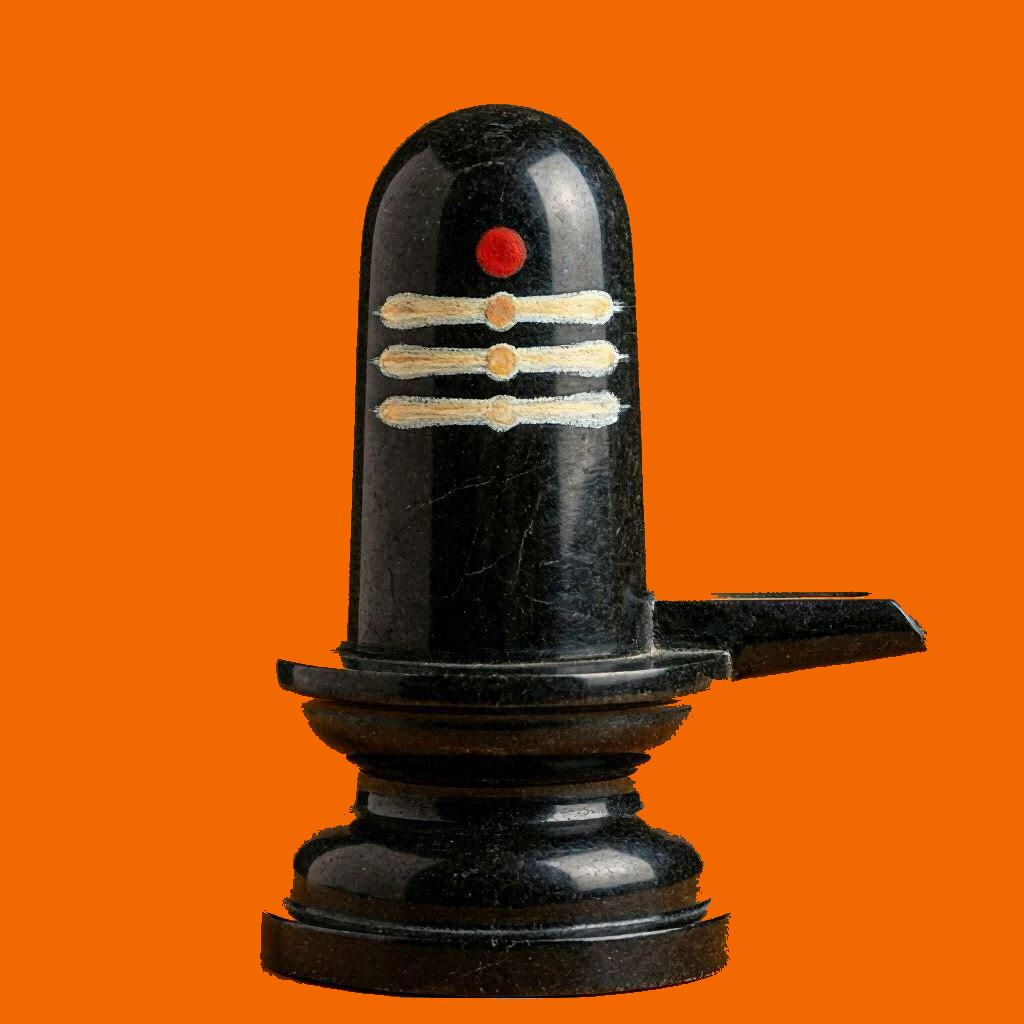
Ask a hundred Shaivas to name the mantra they recite most often and you will get one answer ninety-five times: Om Namah Shivaya. It is the most-used mantra in Indian devotional life after Om itself. It is recited by householders and renunciates, by children learning their first Sanskrit syllables and by elders preparing to die. It is the mantra that appears in the Sri Rudram, recited continuously across India for three thousand years; the mantra that Adi Shankaracharya built a five-verse hymn around; the mantra that the Tamil saint-poet Tirujnana Sambandar reportedly chanted before he had learned to speak any other words.
There is a reason it is the mantra people return to. The reasons are five — one per syllable — and they are worth understanding.
What the five syllables actually say
The mantra has six sounds: Om — Na — Ma — Shi — Va — Ya. The first, Om, is the universal pranava, prefixed to many Vedic and Tantric mantras and not always counted as part of the proper five. The five proper syllables — Na, Ma, Shi, Va, Ya — give the mantra its formal name: Panchakshari, “of five syllables” (pañca = five, akṣara = syllable).
Word by word:
| Syllable | Meaning |
|---|---|
| Oṃ | The primordial sound; the framing pranava of major Vedic mantras |
| Namaḥ | ”I bow,” “homage to,” “salutation to”; the formal Sanskrit gesture of reverence |
| Śivāya | ”to Shiva” — the dative case of Śiva (“the auspicious one”) |
The full phrase translates straightforwardly: Om. I bow to Shiva. Five Sanskrit syllables, two English sentences, one of the simplest declarative sentences in the language. There is no hidden meaning, no esoteric layer, no need for an initiation to access it. The mantra means what it says.
Why the simplicity is the point
The most common misunderstanding about Sanskrit mantras is that their power comes from hidden symbolism — that one must decode each syllable as standing for an element, a chakra, a deity-aspect, a planetary force, etc. There are mantras for which that decoding is appropriate (the more elaborate Tantric bija mantras like Om Hauṃ Jūṃ Saḥ really do have that structure), but Om Namah Shivaya is not one of them.
Om Namah Shivaya is a bhakti mantra — its power comes from the relationship the chanter forms with Shiva through the repetition, not from any hidden cosmological mapping inside the syllables. The mantra is direct: “I bow.” The bowing is the practice. Everything else is commentary.
This is why the mantra works for the illiterate village grandmother and for the Sanskrit-scholarly priest. Neither one has decoded anything; both are bowing. The mantra is identical in their mouths.
The Vedic source
Although Om Namah Shivaya is associated in popular practice with the medieval Shaiva-bhakti tradition, the mantra itself is older. It appears in the Sri Rudram — specifically in the Krishna Yajurveda’s Rudra-adhyaya — at chapter 1, verse 8, embedded in the longest extended Shiva hymn the Vedic corpus produces. The Sri Rudram is dated by Sanskritists to roughly 1200–800 BCE, making Om Namah Shivaya at least three thousand years old in continuously documented liturgical use.
This Vedic provenance matters editorially. Om Namah Shivaya is not a medieval invention or a popular accretion; it is preserved in the Vedas, the most authoritative layer of the Indian textual canon. When a Shaiva practitioner chants it, they are chanting words that have been continuously chanted by Shaivas for longer than most of the world’s surviving religions have existed.
For practitioners interested in the Vedic context, the Sri Rudram is the canonical longer text in which Om Namah Shivaya is the central crystallisation. Most contemporary Shaiva daily practice uses just the mantra; the full Sri Rudram is reserved for Pradosham, Maha Shivaratri, and abhishekam services.
What the repetition is doing to the mind
Here is where the editorial commitment of this site requires honesty. The traditional Shaiva claim is that mantric repetition produces real changes — in attention, in mood regulation, in the capacity to sit with discomfort, in the relationship to one’s own thoughts. This is also a claim that contemporary cognitive science can examine, and the results are converging more than is usually assumed.
The research is most developed for transcendental meditation (a related but distinct mantric practice) and focused-attention meditation generally; less so for Om Namah Shivaya specifically, where the published research is thin. But the underlying mechanism is well documented:
Default mode network downregulation. The “default mode network” is the set of brain regions active when the mind is wandering — rehearsing past conversations, anticipating future scenarios, ruminating on identity. Sustained attentional practices, including mantric repetition, reduce default-mode activation. This is part of why mantra practice produces the subjective experience of “mental quiet” — the network responsible for internal narration is genuinely turning down.
Vagal tone improvement. The slow, regular breath that accompanies mantric repetition increases parasympathetic nervous system activity (the “rest and digest” branch), which over weeks of practice raises baseline vagal tone — a physiological marker correlated with stress resilience, emotional regulation, and immune function.
Habit reformation of attentional return. Every time the mind wanders during the practice and the practitioner returns to the mantra, a small piece of attentional discipline is being trained. Over weeks, this generalises — the capacity to notice a thought-stream and return attention to a chosen object transfers to other domains of life.
None of this requires accepting any metaphysical claim about the mantra. The mantra’s effects on attention, mood, and physiology happen in any mind that does the practice consistently — Shaiva or otherwise.
That said, the traditional claim is that there is more going on than the mechanisms above. The tradition holds that the mantra is also a relational practice — a relationship with Shiva that develops over years and that the practitioner does not invent but enters. This claim is not measurable. It is also not the kind of claim a website should try to defend or argue against. We mention it because it is what practitioners report, and because the lived practice is impoverished if it is reduced only to the measurable effects.
A seven-day starter
If you have never chanted Om Namah Shivaya before, the following is the most reliable seven-day on-ramp.
Day 1 — Read this article. Sit with the meaning for a few minutes. Decide where you will sit each day. Decide the time. Write both down.
Day 2 — Five minutes. Sit. Say the mantra aloud, at the pace of your breath, for five minutes. Notice that the mind wanders. Return to the next syllable. Do not count.
Day 3 — Five minutes. Same protocol.
Day 4 — Seven minutes. Add two minutes. Notice if there is any difference in how the mind responds.
Day 5 — Seven minutes.
Day 6 — Ten minutes. First full session at the standard daily length.
Day 7 — Ten minutes. Close the week. Sit silently for one minute after the mantra, not trying to do anything in particular. Notice what is in the body.
If day seven feels like the practice has begun to find a shape, continue at ten minutes daily — the twenty-one-day protocol is the natural extension. If day seven feels like the practice has not yet caught, repeat the seven-day cycle for another week before deciding.
Common mistakes in the first month
Over-vocalising. Beginners often chant the mantra loudly, especially when they are alone. This is fine for the first week (it helps the body learn the rhythm) but should soften by week two. Sustained loud vocalisation tires the throat and turns the practice into performance. The default in week two and after is aloud but quiet — audible to yourself but not projecting.
Speeding up. The mantra naturally accelerates as the body internalises the rhythm. Resist this. Faster repetition produces shallower internalisation. If you find the pace running away, slow each Om to one full in-breath and each Namah Shivaya to one full out-breath; that’s the floor.
Conflating it with meditation. Mantra practice and meditation are related but distinct. In meditation (most traditions of it) the goal is to drop into silent attention with no object. In mantra practice the object is the mantra itself — the attention rests on the syllables, not on emptiness. If you find yourself “trying to meditate” during Om Namah Shivaya, you are doing the wrong practice; return to the syllables.
Stopping when nothing happens. The most common reason beginners abandon the practice between weeks two and four is that “nothing is happening.” The practice has not produced a vision, a mystical experience, an obvious change. This is correct. The practice is not designed to produce experiences in the first month. It is designed to lay a substrate. The substrate becomes visible later — usually only in retrospect, after several months, when you notice that some part of your daily life has rearranged itself around the practice without your having decided.
Longer arcs
For practitioners who have completed several months of daily Om Namah Shivaya and want to extend, the natural progressions are:
The Panchakshara Stotram. Adi Shankaracharya’s five-verse hymn on the Panchakshari mantra — one verse per syllable, expanding each into a meditation on Shiva. Recited after the daily mantra session, the Stotram adds about three minutes and contextualises the mantra theologically.
The Sri Rudram excerpt. For practitioners with Sanskrit ability or willingness to learn, an excerpt from the Sri Rudram recited weekly (typically on Mondays or Pradosham) adds the Vedic depth. The full Rudram is forty-five minutes; a useful excerpt is the namakam opening, about eight to ten minutes.
The Pradosham observance. Twice a month, on the thirteenth lunar day, the Shaiva tradition holds an extended evening observance — Om Namah Shivaya is recited for a longer session (often 108 times with a mala) and is often combined with the Rudrashtakam, the Lingashtakam, and a temple visit if one is accessible.
Mahashivaratri vigil. Once a year, on Maha Shivaratri (the new-moon night of the dark fortnight of the month of Phalguna, usually February or March), the Shaiva tradition holds an all-night vigil. The standard observance is char prahar puja — four watches of the night, each marked by abhishekam at home or in the temple, with Om Namah Shivaya recited continuously between the formal observances. For a daily practitioner of the mantra, the Mahashivaratri vigil is the year’s culminating practice.
What the mantra is not
A closing honesty. Om Namah Shivaya is not a wish-granting mantra. It is not a spell. It is not a substitute for ethical living, for working through psychological wounds, for taking responsibility for one’s actions, or for the ordinary labour of being a person in the world. The Shaiva tradition is explicit on this point: the mantra accompanies the work of life; it does not replace it.
What the mantra does, when practised steadily, is to slowly change the relationship you have with your own attention, with your own thoughts, and — if the tradition is to be trusted — with Shiva. None of this happens in a week. All of it begins to happen if you sit down tomorrow morning, say it five times, and show up the day after.
The mantra has been there for three thousand years. It will be there for the next three thousand. The only question is whether it will also be in your morning.