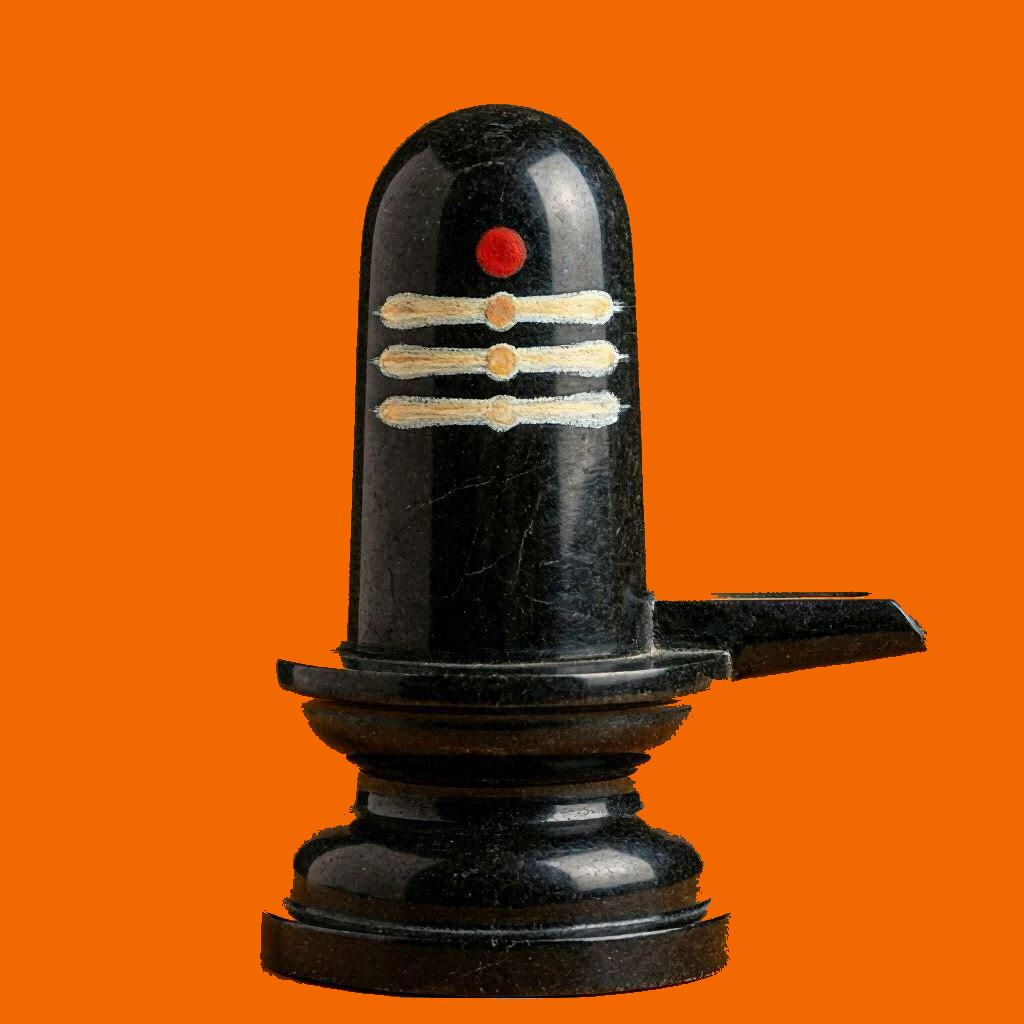
Most people who try to start a Shiva practice fail in the second week. Not because the practice is hard — it isn’t — but because the first week’s enthusiasm runs out before the discipline has hardened into habit. The protocol that follows is designed for that exact failure mode. The first week is so small that you cannot reasonably fail it. The second week extends what is already working. The third week adds the piece that closes the loop.
Ten minutes a day. Three weeks. That is the entire commitment. After twenty-one days you will know whether the practice belongs in your life — not because you have read about it, but because you have done it.
Before you begin
Decide three things in advance and write them down. Not in your head — on paper, or in a note on your phone, somewhere you will see them.
Where you will sit. A specific corner of a specific room. The same place every day. The brain associates physical location with mental state more strongly than people realise; using the same spot every day shortens the time it takes to drop into the practice from minutes to seconds. The location does not need to be elaborate — a chair facing a wall is enough. A small image of Shiva, a single ghee lamp, or a flower from your balcony is more than enough.
When you will sit. A specific clock time. The most reliable window is the first ten minutes after waking, before the day’s first message has been read and before the day’s first decision has been made. The second-best window is the ten minutes immediately before sleep. Either works; both fail. Pick one, write it down, and protect it.
What you will not change. The first three weeks are not for experimenting with different mantras, different postures, different incense, different traditions. The practice is what is written below. If you finish twenty-one days and want to layer something in, that is the right moment. Until then, do exactly the protocol — the discipline of not changing it is half the practice.
Week one — the mantra alone
For seven days, your practice is one thing: ten minutes of Om Namah Shivaya, repeated aloud or in a whisper, while seated comfortably with the eyes either closed or softly downcast.
You do not need a mala. You do not need to count. You do not need to time the breath. You do not need to visualise anything. You only need to keep returning the attention to the syllables when the mind wanders — which it will, repeatedly, in every session.
The pace is your own breath. Om on the in-breath; namah Shivaya on the out-breath. Or Om Namah Shivaya across one slow exhalation. Or any cadence that feels natural. Do not worry about Sanskrit pronunciation in week one — Om Namah Shivaya is forgiving; the standard English-speaker rendering is fine.
When the mind wanders to your work, your worries, the sentence somebody said yesterday, simply notice and return to the next Om. There is no failure in wandering. There is only the failure of not returning. Mind-wandering followed by return is the practice; it is not a problem in the practice. The strength of attention is built by the returning.
Ten minutes. Seven days. That is week one. No additions, no embellishments. By day five most people report that the body begins to lean into the time — the practice starts to want itself, rather than requiring effort.
Week two — adding the closing
On day eight you add one element to the closing of the practice.
After ten minutes of the mantra, you sit silently for one more minute. No mantra. No effort to stay attentive. Just the silence the mantra has produced — and noticing whatever is in the body and mind in that silence. Then a slow exhale and the practice closes.
This one-minute silence is structurally important. The mantra prepares the ground; the silence is the ground itself. Without the silence, the practice is exercise. With the silence, the practice begins to do its work.
If the silence feels uncomfortable in the first days, that is correct. The discomfort is the noise of the mind realising that nothing is now occupying it. Within four or five days the discomfort becomes the most valuable minute of the eleven.
Week two is therefore: ten minutes of mantra plus one minute of silence, for seven days.
If a day is missed, do not double up the next day to make it good. Resume the protocol. Missed days happen. The recovery from a missed day is more important than the missed day itself — practitioners who quit on missed days quit; practitioners who resume the next day continue indefinitely.
Week three — the diya
On day fifteen you add the third element, at the beginning rather than the end.
Before you sit, light a single small diya (oil lamp) or a single candle on the surface in front of you. The flame is the formal sign that the practice has begun. You light it; you sit; you do the eleven-minute protocol; you close; you extinguish the flame.
In Shaiva tradition, the flame is not symbolic decoration — it is functional. The flame holds the space the practice is happening in. When the flame is lit, the space is consecrated; when it is extinguished, the consecration closes. The Sanskrit term is deepa-arpaṇam — the offering of light — and it is the simplest of the traditional pancha-upacharas, the five offerings that constitute a complete Shiva-puja.
In a Western or apartment setting where an oil lamp is impractical, a single tealight candle is fully sufficient. The point is the flame, not the fuel.
Week three is therefore: light a flame, sit for ten minutes of mantra, sit for one minute of silence, extinguish the flame. Seven days.
Day twenty-one and after
On the twenty-second day, you have a decision to make. The decision is not whether to continue — that question will have answered itself by then. The decision is whether to extend.
The minimal extension is to add five minutes to the mantra time, making the protocol sixteen minutes. Many practitioners hold at exactly this length for years.
The first natural addition is the practice of Pradosham — a longer, more deliberate session on the thirteenth lunar day (the trayodashi), held twice a month, usually in the twilight hour between sunset and the early evening. The Pradosham session is forty to sixty minutes, includes additional hymns like the Rudrashtakam or the Lingashtakam, and is the everyday Shaiva’s principal observance beyond the daily practice. Most Hindu calendar apps will mark the Pradosham dates; the in-app Sankalpa Arc tracks them automatically.
The second natural addition is to visit a Shiva temple in person. The daily home practice is the bhakti’s anchor; the temple visit is its public face. The two are different practices that reinforce each other — the home practice prepares the mind to receive what the temple gives; the temple visit replenishes what the home practice has spent.
What not to add
Three additions that beginners attempt and that almost always backfire:
Multiple mantras. The temptation to add the Mahamrityunjaya, the Rudram, or any other powerful Shaiva mantra to the daily practice in the first month is strong. Resist it. Each Shaiva mantra has its own discipline, its own timing, and its own preparation. Until Om Namah Shivaya has been steady for at least sixty consecutive days, do not stack a second mantra on top.
Counted japa. Counting with a mala (108 beads) is a real practice, but it is a different practice. Counted japa requires a specific posture, a specific breath, and an attention to the count that subtly redirects the attention from the mantra. For the first ninety days, do uncounted attention-only mantra — it produces deeper internalisation.
Public commentary. Do not announce your practice to friends or social media in the first three weeks. Do not write about it. Do not post the diya photograph. The practice in its first weeks is fragile precisely because it is private — the moment it becomes public, the part of the mind that wants to be seen takes over, and that part is not the part of you that is doing the practice. Save the public reflection for after the ninetieth day, if at all.
The first sign that it is working
The clearest early sign is small and easily missed: the morning you sit down at your usual time and realise you sat down without deciding to. The decision-fatigue around starting the practice has dissolved into the body; the body is doing it on its own.
The second sign, usually around day forty to sixty, is that the silence at the end of the practice begins to be the part you want. The mantra becomes the preparation; the silence becomes the content. This is the practice deepening into what it was always going to become.
The third sign, usually after several months, is that the rest of the day starts to organise itself around the practice. Decisions clarify faster. The reactivity to small disturbances reduces. The capacity to sit with discomfort — at work, in relationships, in your own internal weather — widens by several degrees.
These signs are not promises. They are what practitioners report. Your own practice will be your own and may surface different signs in different sequence. The protocol above is the entry door, not the building. What is inside the building, only practice reveals.
A note on Sankalpa
In the in-app Sankalpa Arc, the twenty-one-day protocol described here is the first arc — the Foundation Arc. After it come progressively longer arcs (the Daily Discipline Arc, the Pradosham Arc, the Mahashivaratri Vigil Arc, the 41-day Mahamrityunjaya Arc), each one building on the last. The Sankalpa system is the in-app implementation of the same principle this essay describes: small commitments, kept, compound.
The app is one way. This essay is another. The protocol works whether or not you use the app.
What matters is sitting down tomorrow morning, lighting nothing in week one, saying Om Namah Shivaya a hundred or so times across ten minutes, and showing up the next day. Everything else follows from that.