The opening verse
विश्वेश्वराय नरकार्णवतारणाय कर्णामृताय शशिशेखरधारणाय। कर्पूरकान्तिधवलाय जटाधराय दारिद्र्यदुःखदहनाय नमः शिवाय॥
In IAST:
Viśveśvarāya naraka-ārṇava-tāraṇāya karṇāmṛtāya śaśi-śekhara-dhāraṇāya, karpūra-kānti-dhavalāya jaṭā-dharāya dāridrya-duḥkha-dahanāya namaḥ Śivāya.
In English:
Salutations to Shiva — lord of the universe, deliverer from the ocean of hell, ambrosia to the ears, bearer of the crescent moon on his crest, white-radiant like camphor, matted-locked, the burner of poverty and sorrow.
The opening verse establishes the hymn’s central concern in plain language. After eight epithets praising Shiva’s cosmic standing, the verse closes with the specific petition: dāridrya-duḥkha-dahanāya namaḥ Śivāya — “salutations to the burner of poverty-sorrow.” The hymn is asking, without shame, for the elimination of financial distress.
The hymn’s frankness
What distinguishes the Daridraya Dahana Stotram in the Shaiva devotional corpus is its directness about material concern. Most Shaiva hymns operate in the registers of cosmic praise (Rudrashtakam), philosophical recognition (Nirvana Shatkam), or ritual structure (Lingashtakam). This hymn is in the register of petition — the chanter asks for something specific, and the something specific is wealth.
This bluntness is the hymn’s gift. Householders in financial difficulty do not need a philosophical hymn that asks them to transcend their concern. They need a hymn that meets them in the concern, validates it, and offers a devotional act for handling it. The Daridraya Dahana Stotram does exactly this.
The Shaiva tradition’s broader philosophical justification: artha (material wellbeing) is one of the four legitimate human goals (purusharthas). The Chamakam half of the Sri Rudram explicitly lists wealth among the boons requested from Rudra-Shiva. There is no scriptural basis for treating material prayer as inferior. The hymn stands fully within tradition.
What each verse asks
Each of the eight verses follows the same pattern: a stack of devotional epithets, then the closing petition for poverty-burning. The epithets across the eight verses cover most of the major Shaiva iconographic elements:
| Verse | Shiva named as |
|---|---|
| 1 | Lord of the universe, deliverer from the hell-ocean, white-radiant, matted-locked |
| 2 | Cremation-ground dweller, garlanded with the serpent-king, ash-smeared |
| 3 | Three-eyed, blue-throated, half-moon-crested, trident-bearer |
| 4 | Adored by Brahma, Vishnu, and Indra; the lord of yoga |
| 5 | Lord of Parvati, lord of Ganesha, lord of Skanda |
| 6 | Source of the Vedas, destroyer of Tripura, scorcher of Kama |
| 7 | The auspicious one, the all-protector, the granter of refuge |
| 8 | The benediction — the closing summary and final petition |
By the eighth verse the chanter has named Shiva eight times by his most authoritative epithets and asked, each time, for the burning of poverty. The petition is not vague; it is specific and repeated.
Practice notes
The Daridraya Dahana Stotram should be recited:
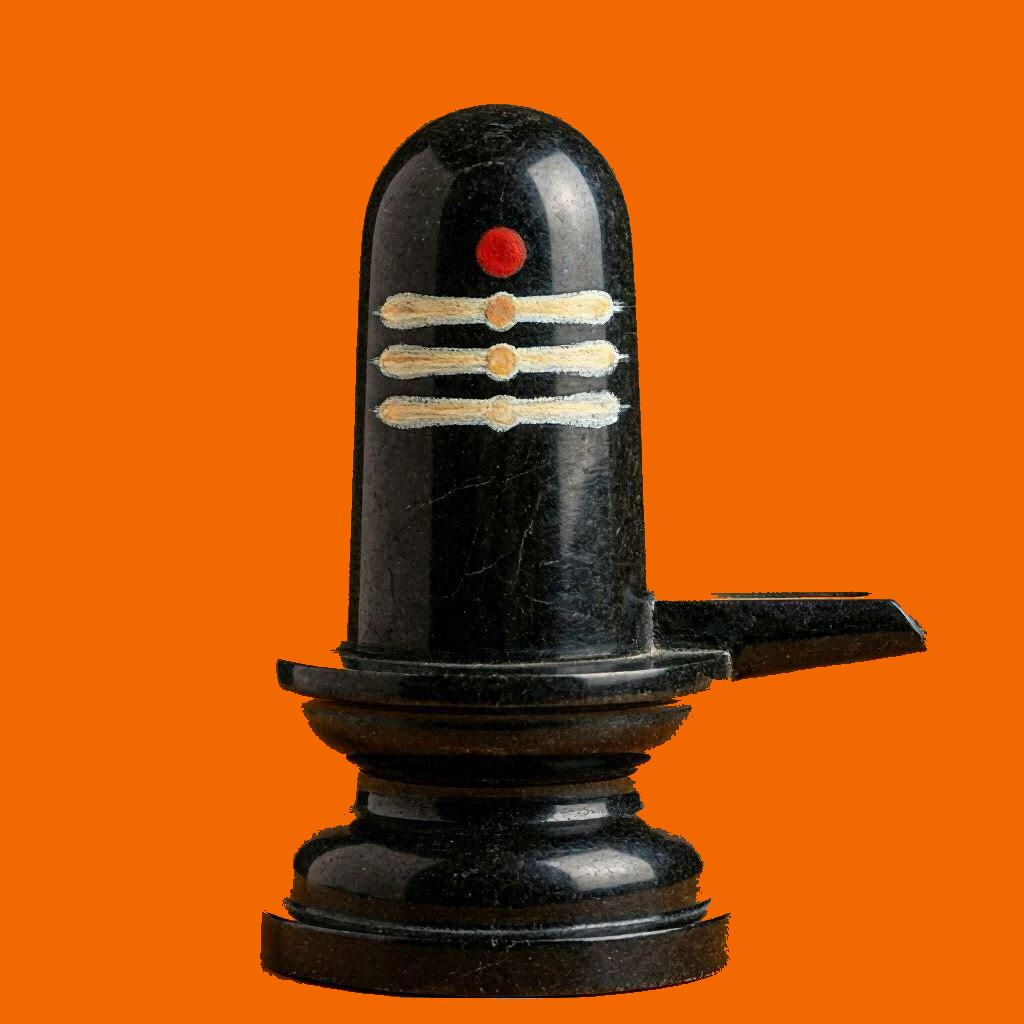
- In a clean space, ideally before a Shiva image or linga
- With a deepa lit (oil lamp, traditionally with sesame oil)
- Eight times in succession for a more emphatic petition (some traditions hold that eight repetitions of an ashtakam corresponds to one complete cycle of attention to the deity)
- With a bilva offering if available
- Continued daily for forty-three days (one mandala) if the difficulty is sustained; this is the canonical commitment for serious petitionary practice
The practice is not a wealth-vending machine. It is a disciplined, repeated, devotional act of placing material concern at the deity’s feet. The point is not that Shiva responds to the eight verses by depositing funds in a bank account. The point is that the chanter, by reciting the verses, shifts from the contracted state of financial fear to the open state of surrender. From that open state, the world can be approached with clearer judgment, and the actions one needs to take (job search, debt restructuring, new venture, household budgeting) become possible.
Editorial honesty about results
A note we owe the reader. The Daridraya Dahana Stotram has been recited by householders for centuries, and the historical record contains both testimonies of relief and testimonies of continued struggle. The Shaiva tradition does not promise that every recitation will produce material results within a specific timeframe. What it promises is that the practice itself is a legitimate devotional act, that it places the chanter in right relationship with Shiva on the question of material need, and that the inner shift it produces is, in the tradition’s view, the precondition for the outer change.
A reader in genuine financial distress should approach the hymn as one element in a broader response — alongside practical action, professional help, and community support. The hymn is a devotional tool, not a substitute for the rest of life. Used as one element among several, it has the long lineage of householders who have found it helpful behind it.
When to recite
The traditional occasions:
- Daily, when in active financial difficulty
- Friday (Shukravara) — the day associated with material concerns in most regional traditions
- Pradosham — the twilight window of Shiva-receptivity, twice a lunar month
- Akshaya Tritiya — the spring festival of “imperishable” prosperity
- Before significant material undertakings — job interviews, business launches, large purchases, contract signings
A practical pattern many householders adopt: forty-three consecutive days of single daily recitation during a difficult financial period (one mandala), then a weekly recitation indefinitely after, on Friday or Pradosham.
On the longer tradition of petitionary practice
The Daridraya Dahana Stotram is one of several Shaiva petitionary hymns addressing specific worldly concerns. Others include the Shiva Aparadha Kshamapana Stotram (for forgiveness — see our Aparadha Kshamapana entry), the Vedasara Shiva Stotram (for general protection — see our Vedasara entry), and various Mahamrityunjaya practices for health. Together these hymns form the petitionary corpus of the Shaiva tradition — the practitioner’s tools for specific concerns. The Daridraya Dahana Stotram is the wealth-concern hymn in that corpus.
The existence and longevity of this petitionary corpus is itself instructive. The Shaiva tradition recognises that devotional practice includes asking, not only praising. To deny the practitioner the tools of asking would be to deny half of devotion. These hymns are the tradition’s honest answer.
Practice
For a householder beginning the practice in a moment of difficulty:
- Read the English meaning of the hymn slowly, several times, until the structure is clear
- Listen to a recording of the Sanskrit recitation to hear the metre
- Recite slowly with a printed text for the first week
- By the second week, the eight verses are mostly internal
- Commit to forty-three consecutive days at one recitation per day, ideally at the same time each morning
Whatever the outer outcome, the practice itself is settled work. The chanter who has recited the Daridraya Dahana Stotram for forty-three days in succession has done what the Shaiva tradition recommends for the situation they are in. The rest belongs to Shiva.