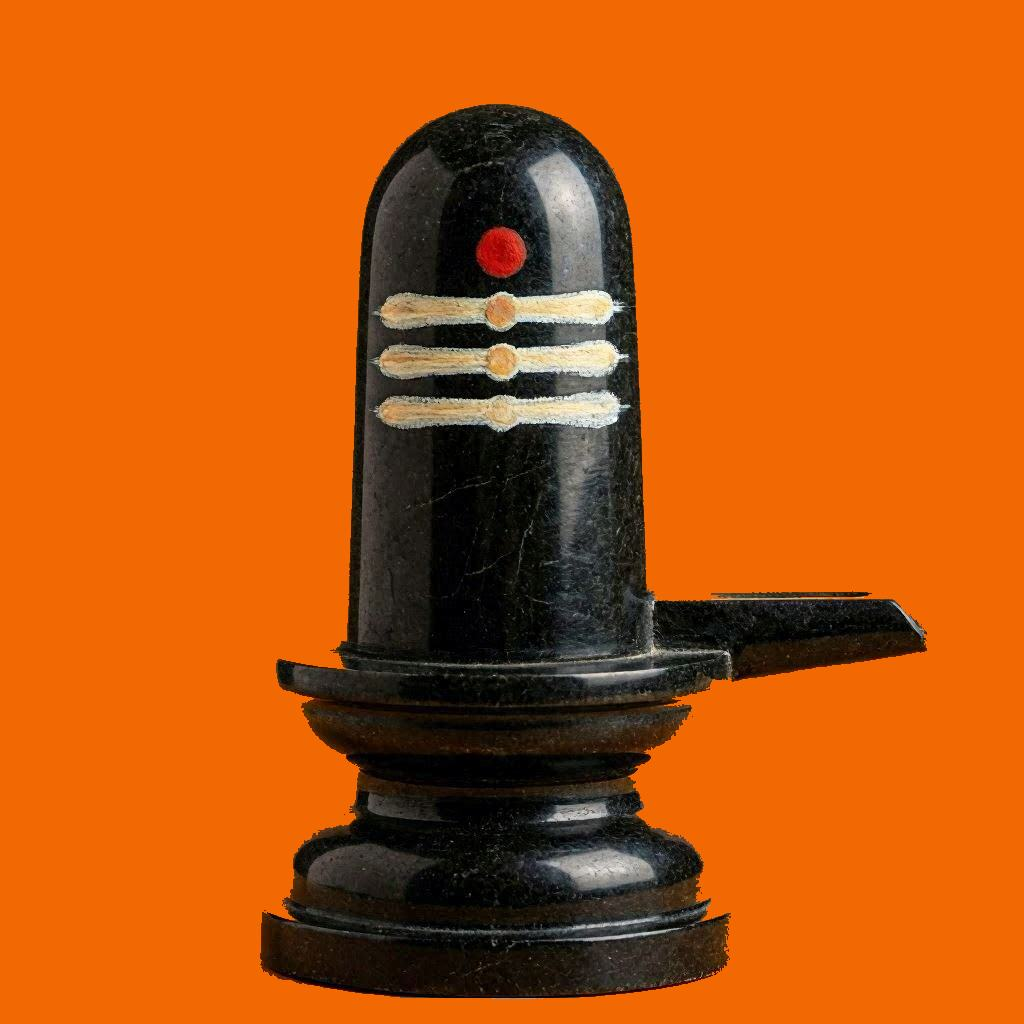
Walk into any Shiva temple in India on a Monday morning and you will see the same thing happening: a thin, continuous stream of water falling onto the lingam. Milk from a steel pot. A priest’s hand steadying a copper vessel. Someone’s grandmother emptying a small bottle she has carried from home.
This is abhishekam — the ritual bath. It is the most-performed act in the whole of Shaiva worship, older than the temples it is performed in, and the one most reliably flattened into a rate card: Rudrabhishek, 2100 rupees, includes panchamrit.
This essay is about what is actually going on. What abhishek is, what makes an abhishek a Rudra-abhishek specifically, which substances are offered and in what order, what the tradition claims each one does, the counting scheme that runs from a single recitation up to the eleven-thousand-recitation Atirudra, and — for the reader who is not going to book a priest — the five-minute version that is complete on its own terms.
Abhishek is not a wash
The first correction: abhishek is not cleaning. Nothing about the lingam is dirty, and the water is not removing anything.
The Sanskrit abhiṣeka means anointing or consecration — the same word used for the coronation bath of a king. Its root sense is the pouring that establishes something, not the pouring that cleans it. When a king is abhishikta, he is being made king by the pouring. When the lingam is abhishikta, the tradition understands the same grammar: the continuous stream is an act of address.
This matters practically, because it changes what you are doing while you pour. If it were cleaning, thoroughness would be the virtue. It is not cleaning, so the virtue is continuity — an unbroken stream, an unbroken attention. The tradition’s word for the ideal is taila-dhārāvat: like a thread of oil, which falls without separating into drops.
If you want the theology under the object being bathed, we have written about that separately in what the Shiva lingam actually is. This essay assumes it.
What makes it Rudra-abhishek
Here is the distinction almost every rate card erases.
Abhishek is the act of pouring. Any abhishek is an abhishek — water, milk, whatever is at hand, with whatever is being chanted.
Rudrabhishek is abhishek performed while the Sri Rudram is recited.
The Sri Rudram is not a stotra composed by a devotional poet. It is Vedic — it sits inside the Krishna Yajurveda, in the Taittiriya Samhita, at 4.5 (the Namakam, named for its relentless repetition of namaḥ) and 4.7 (the Chamakam, named for its ca me — “and for me”). It is among the oldest continuously recited texts in the world, and it is the hymn in which the name Shiva appears as an epithet of Rudra. We have the text, its structure, and its recitation notes in the Sri Rudram entry.
So: the ritual is called Rudrabhishek because the Rudram is what is being poured with. Take away the Rudram and you have an abhishek — a complete and worthy act — but not a Rudrabhishek. This is worth knowing before you pay for one, because what you are paying for is a trained reciter’s time, and reciting the Rudram correctly takes roughly forty-five minutes for a single round.
When a temple offers you “Rudrabhishek” performed in twelve minutes, you now know what has been left out.
The substances, and what tradition says each does
The classical offering set is the panchamrita — five nectars — followed by a set of optional dravyas chosen for intention. Each is followed by plain water; you do not layer honey onto milk.
The panchamrita, in order:
- Milk (kshira) — the base offering, associated with purity and with nourishment of the household
- Curd (dadhi) — associated with progeny and with steadiness
- Ghee (ghrita) — associated with health and with the sustaining of what already exists
- Honey (madhu) — associated with sweetness of speech and relations
- Sugar (sharkara, usually misri) — associated with the removal of bitterness
Common additional dravyas:
- Water from a river — Ganga jal where available, though the tradition is clear that any clean water offered with attention is sufficient. The Shiva Purana is emphatic about this; the insistence on Ganga jal specifically is later and largely commercial.
- Coconut water — offered for what tradition calls relief from long-standing obstruction
- Sugarcane juice — associated with material prosperity
- Sandalwood paste in water — offered for cooling, and specifically in the hot months
- Bhasma / vibhuti (sacred ash) — the one substance that is not poured but applied. Its association is the most unsentimental in the whole tradition: this is what remains. If you want to see this at its most uncompromising, it is the Bhasma Aarti at Mahakaleshwar.
And the offerings that follow the bath: bilva leaves, placed in threes with the smooth side down. Bilva is the offering the tradition considers irreplaceable — see why bilva leaves.
Two prohibitions worth knowing
No tulsi. Tulsi is Vishnu’s leaf and is traditionally not offered on the lingam. There is a Puranic story underneath it (Vrinda and Jalandhara), but the operative fact is the practice: temples will not accept it.
No ketaki flower. This comes from the Lingodbhava episode in the Shiva Purana, in which the ketaki bears false witness to having seen the top of the infinite pillar of light and is cursed to be excluded from Shiva’s worship. It is one of the few outright exclusions in a tradition that otherwise accepts nearly anything offered sincerely.
The deeper point in both: the Shaiva tradition has very few rules about what you offer and a great deal to say about how. A stone lingam under a tree, water from a plastic bottle, and full attention is a valid abhishek. A silver kalash, imported honey, and a phone in your other hand is not.
The jaladhari, and the one movement people get wrong
The lingam sits in a jaladhari (also gomukhi) — the channelled base that carries the poured liquid out to one side. That outflow is not drainage. It is nirmalya — offered substance that has been in contact with the deity.
The practical inheritance: you do not step across the jaladhari channel. In temple practice, circumambulation of a Shiva lingam is therefore not a full circle. You go from the front, around to the channel, and return the way you came, then repeat on the other side — the chandrakala or half-moon pradakshina. Doing a full circle and stepping over the outflow is the single most common error visitors make, and the priests notice.
The counting scheme: Ekadashini to Atirudra
The scale of a Rudrabhishek is measured in recitations of the Namakam, alternated with the Chamakam in a fixed pattern. The names you will see on temple notice boards, smallest to largest:
- Rudra — one Namakam, one Chamakam. A single round. About forty-five minutes.
- Ekadashini (Rudri) — eleven Namakams, cycling through the eleven sections of the Chamakam. Roughly half a day with a small group of reciters.
- Laghurudra — eleven Ekadashinis: 121 Namakams. Typically several priests over one to three days.
- Maharudra — eleven Laghurudras: 1,331 Namakams. A temple-scale undertaking, usually many reciters over days.
- Atirudra — eleven Maharudras: 14,641 Namakams. Rare. Institutional. Months of planning, dozens of reciters, and usually a once-in-a-generation event for the temple that hosts it.
Regional traditions differ in how the Chamakam alternation is distributed and in how many reciters are considered to “count” for a shared recitation. If you are commissioning one, ask which paddhati the temple follows rather than assuming.
An honest note on scale: nothing in the source texts says an Atirudra is 14,641 times more effective than a single Rudra. The counting scheme is a scheme of magnitude of undertaking — the vow is larger, the resources committed are larger, the number of people whose attention is pooled is larger. Read the phala-shruti (the traditional statements of result) attached to each level as the tradition’s own language for the seriousness of the vow, not as an exchange rate.
When
The Shaiva calendar concentrates abhishek at four points, in increasing rarity:
- Every Monday — Somvar, the Moon’s day and Shiva’s. The weekly anchor; see Somvar Vrat.
- Every Pradosham — the twilight hour of the thirteenth lunar day, twice a month. Abhishek at Pradosham is the most-recommended single practice in the whole calendar, for reasons we set out in the Pradosham essay.
- Through Shravan — the monsoon month in which the entire practice intensifies, and the month of the great water-carrying pilgrimages. See Shravan.
- Maha Shivaratri — four abhisheks across the four quarters of the night, once a year.
The in-app Sacred Calendar tracks all four. So does any competent panchang.
The five-minute version, at home
Most readers of this essay will never commission a Laghurudra. That is fine, and the tradition does not regard it as a lesser form of participation. Here is the complete domestic version.
What you need: a lingam or a photograph of one, a small vessel of clean water, a spoon of milk if you have it, three bilva leaves if you can get them, and a diya.
The sequence:
- Sit. Light the diya. Three slow breaths before you touch anything.
- Pour a little water over the lingam in one unbroken stream, chanting Om Namah Shivaya. Do not break the stream to adjust your grip — refill and start again rather than dribble.
- Milk, the same way. Then water again, to follow it.
- Place the bilva leaves, smooth side down.
- Chant Om Namah Shivaya 108 times, or the Lingashtakam if you have it by heart, or the Rudrashtakam if you want the fuller praise.
- Sit silently for two minutes afterwards. This part is not optional decoration; it is where the practice does its work.
If you know the Sri Rudram, recite it here and you have kept a Rudrabhishek in your own house, with nobody paid and nothing purchased. If you do not, what you have kept is an abhishek — which is what the overwhelming majority of Shaivas have kept for the overwhelming majority of the tradition’s history.
The meaning of Om Namah Shivaya is worth reading once if you have only ever chanted it by rote; it changes what the 108 repetitions feel like.
What it is for
The tradition’s answer, stripped of phala-shruti, is unglamorous: abhishek is a practice of sustained, physical, unbroken attention directed at something that does not respond.
That is the whole mechanism. You hold a vessel. The stream must not break. You are not being answered, thanked, or watched. For the length of the pour, there is nothing to do but keep pouring well.
Traditions that have kept a practice alive for three thousand years usually have a reason, and the reason is rarely the one on the rate card. The reason here is that an unbroken stream is very difficult to maintain while thinking about something else — and a person who does that twice a month for ten years has practised something that no amount of reading about Shiva will produce.
Om Namah Shivaya.
Sources and method. The Sri Rudram references are to the Taittiriya Samhita of the Krishna Yajurveda, 4.5 (Namakam) and 4.7 (Chamakam). The offering sets, the ketaki exclusion, and the Lingodbhava episode are from the Shiva Purana (Vidyeshvara and Koti Rudra Samhitas). The Ekadashini-through-Atirudra counting scheme follows the paddhati most commonly used in South Indian and Maharashtrian temple practice; regional variation is real and noted in the text. Statements of ritual result are given as the tradition states them, not as claims of fact.